Indoor Cat Toys
How to Use a Cat Wand Toy: Hunt, Catch, and Put It Away
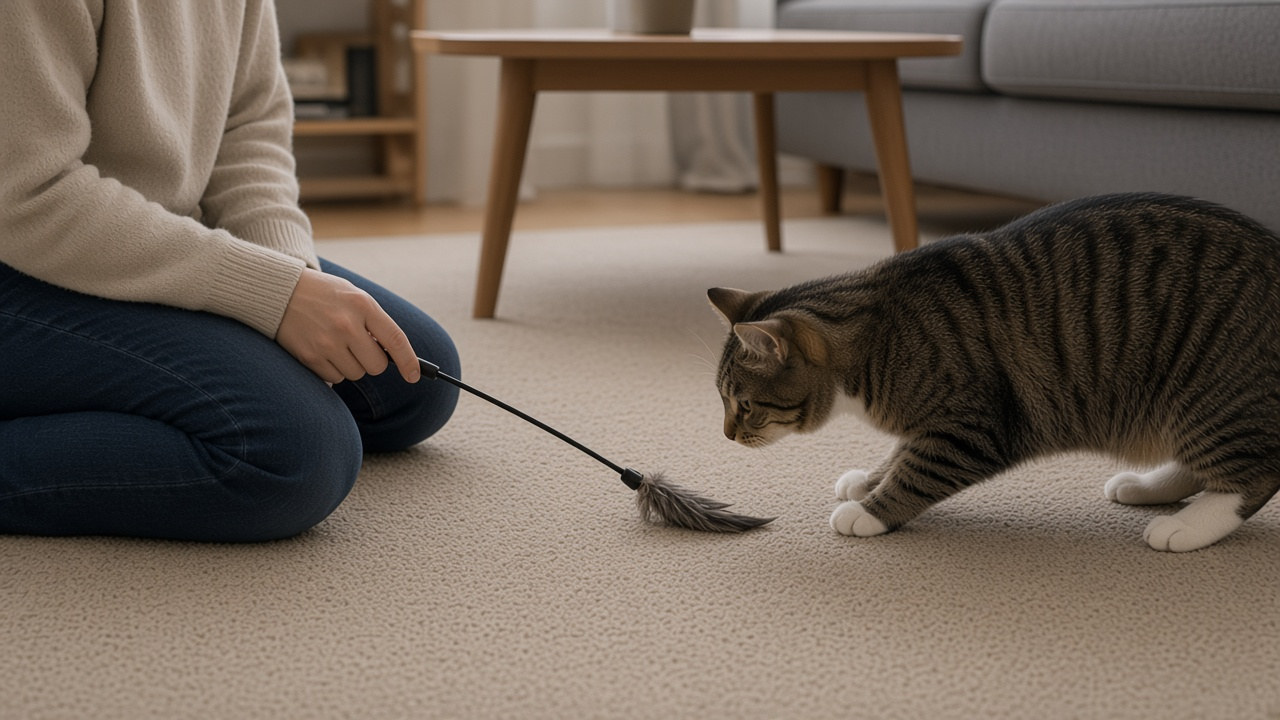
Learn how to use a cat wand toy: play a short hunt that ends on a catch, keep the line and feathers from becoming a hazard, and put the wand away after.
A cat wand toy is a toy you hold: a rod, a line, and a lure the cat can chase and actually catch. Searches for a wand toy for cats are looking for the same thing. It is for the minutes you are in the room, not for a workday running on its own.
The sessions that help follow a short hunting sequence and end with the cat catching something real. The ones that go badly leave the line on the floor, keep the lure just out of reach, or run until the cat is frantic.
This guide is about how to play, how to keep the line and feathers from becoming a hazard, and when to put the wand away. It is not a ranked list of wands.
When a wand toy is the right tool
A wand is most useful when the gap you are trying to fill is a hunt with you:
- You have an indoor cat that needs a daily chase, pounce, and catch, and you can stay for the session.
- The room is tight, so you need a lure you can keep low in a clear path rather than a long toy swinging into lamps and shins.
- You want to control the pace, slow down, and stop before the cat goes over the edge.
- You are home and can put the wand away when you are done.
It is the wrong tool, or the wrong time to pick it up, when:
- No one will be in the room. An unattended wand is a string, not a self-play toy. For hours you are gone, use the checklist in our guide to automatic cat toys for indoor cats left alone.
- You are hoping the wand will replace every other job in the day, including meals. A puzzle feeder occupies a different drive.
- A kitten is still swallowing strings or small parts, and the wand would be left where they can chew it. That is a teething problem as much as a play problem.
- Two cats already fight over toys, and you plan to drag one lure between them and walk away.
If you need a broader plan for apartments, multi-cat homes, and workdays, that belongs with interactive play for indoor cats. This page is about the wand itself.
How to play without turning the wand into a problem
1. Keep the lure low and move it like prey
Cats hunt in a sequence: orient, stalk, chase, pounce, and—when the session goes well—catch. The wand’s job is to make that sequence possible in the room you actually have.
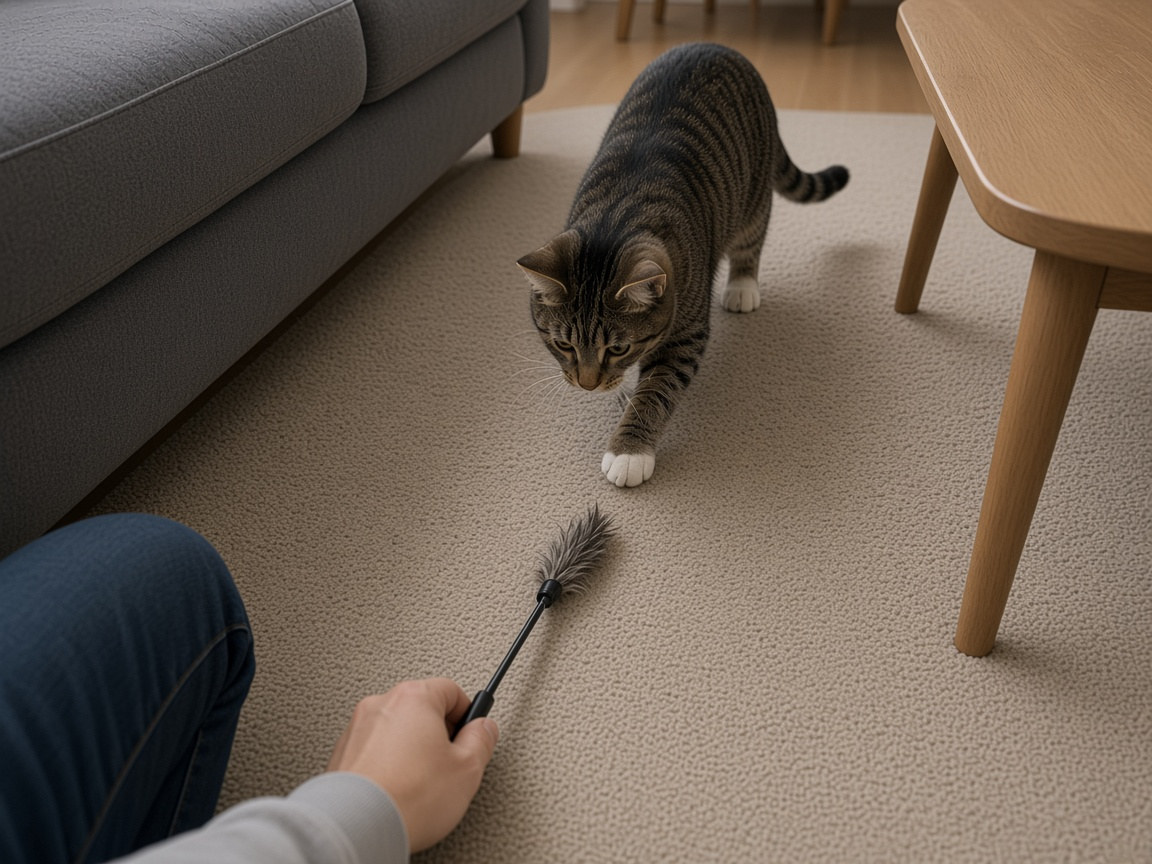
Keep the lure close to the floor or to the furniture the cat would naturally stalk around. A lure that stays high invites jumping and twisting in a space that may have a coffee table, a lamp, and little room to land. In a tight apartment, a shorter wand, or a longer one used with a short, low stroke, is usually easier to control than a wide aerial sweep.
Move the lure the way prey moves: hide it, let it dart, then pause long enough for the cat to set up a pounce. Constant, frantic motion is hard to start a hunt with and harder to end well. If the cat only watches, slow down before you assume they are not interested.
2. Let the cat catch, then end on that catch
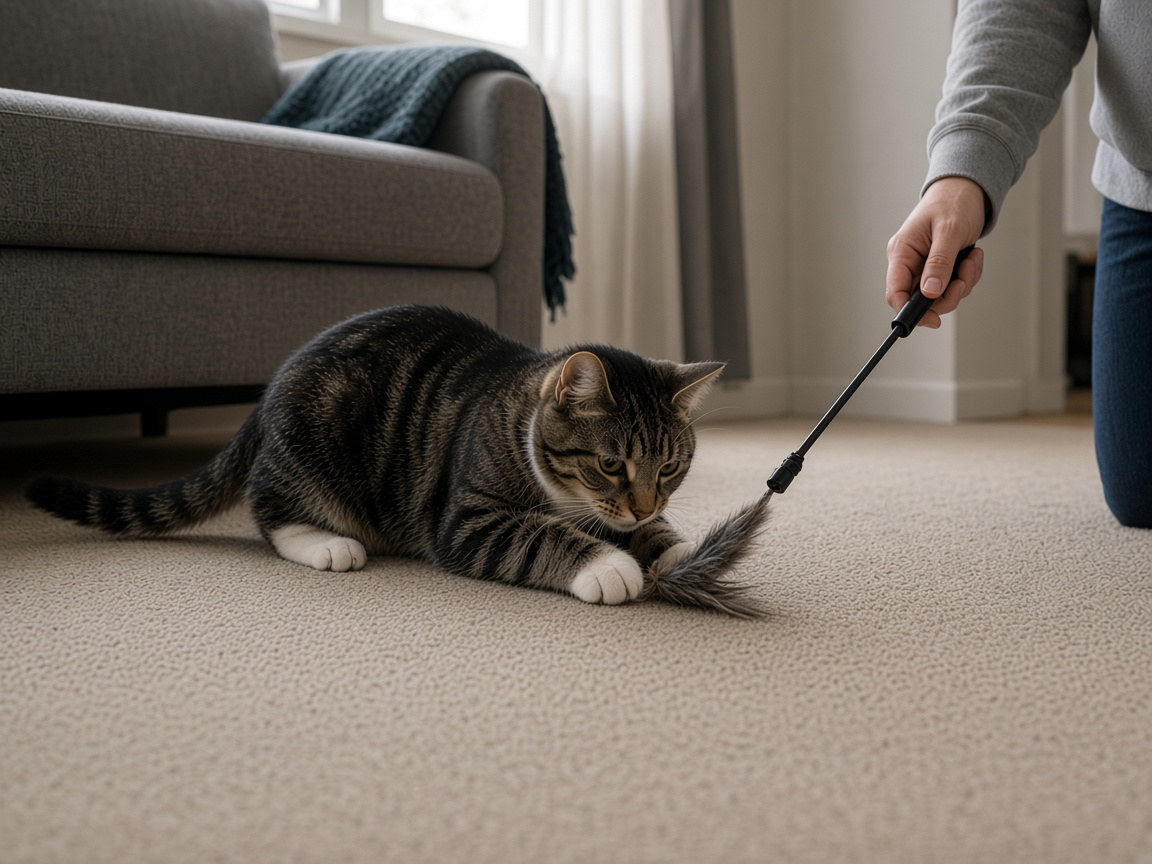
The catch is not a bonus. It is the end of the sequence. If you yank the lure away every time the cat gets close, you have built a chase with no finish—the same problem a laser creates, with a physical toy you could have let them have.
In most sessions, let the cat pin, hold, or briefly “kill” the lure. If you want another short burst, wait for a drop or a pause, then start again at a lower intensity. End on a catch the cat actually gets, even if the last catch is quieter than the first one.
If the lure itself is too fragile to be caught, it is a poor everyday wand, not a reason to deny the finish. You can also end by sliding in a sturdy toy or a treat the cat can grab, then putting the wand away. The point is that the hunt stops on something real.
3. Keep it short, and stop before the peak
Ten to fifteen minutes is enough for many indoor cats. Some are done in five. Two short sessions—one before you leave, one when you get home—usually beat a single marathon that leaves the cat wound up or overheated.
Watch the cat, not the clock. If play turns sloppy, frantic, or mouthy toward your hands, you have already gone too long. Stop, let them have the lure or a backup toy for a moment, then put the wand away. Ending early is a successful session.
4. Use a clear path in the room you have
You do not need a hallway the length of the apartment. You need a lane the cat can run and pounce in without hitting a sharp table corner or a glass of water. Move a chair, fold a throw, and keep the stroke inside that path.
The same long wand that works in a house can take out a lamp in a studio. If the room is small, shorten how far you let the lure travel rather than forcing a bigger show. Situation-by-situation setup—apartments, more than one cat, days you are gone—is covered in the interactive indoor-cat guide. The rule on this page is simpler: the lure should stay in a space you can see and the cat can land in.
5. Treat the line, feathers, and clips as the risky parts
The rod is rarely the problem. The line, elastic, feathers, felt, and plastic clips are.
Strings, yarn, ribbons, and stretchy cords can wrap around a neck or limb, or be swallowed. Feathers and felt mice shed. Clips and bells come off. Before each session, look at the lure: if it is already coming apart, retire it or repair it before you play. During play, if a piece detaches, pick it up.
Do not loop the line around furniture, doorknobs, or the cat. If you use a wand with a long, thin string, keep enough slack to move the lure, and enough control that it cannot wrap while you look away. Elastic lines add snap; they also add wrap risk if the cat bolts and the cord goes tight.
This is a supervised toy. It does not belong on the floor between sessions.
6. Put the wand away when you are done
When the session is over, pick the wand up and put it out of reach—on a high shelf, in a closet, or in a drawer the cat cannot open. Leaving it on the sofa or under the coffee table turns a play tool into a chewing project, especially for kittens.
The lure is tempting because it is made to be. That is exactly why it should not sit out. If you want the cat to have something after play, leave a sturdy, string-free toy, not the teaser.
Common mistakes
Never letting the cat catch the lure, or switching to a laser and stopping when the light goes off. The cat still needs a finish they can hold.
Leaving the wand on the floor “so the cat can play later.” Later, the line is what they play with.
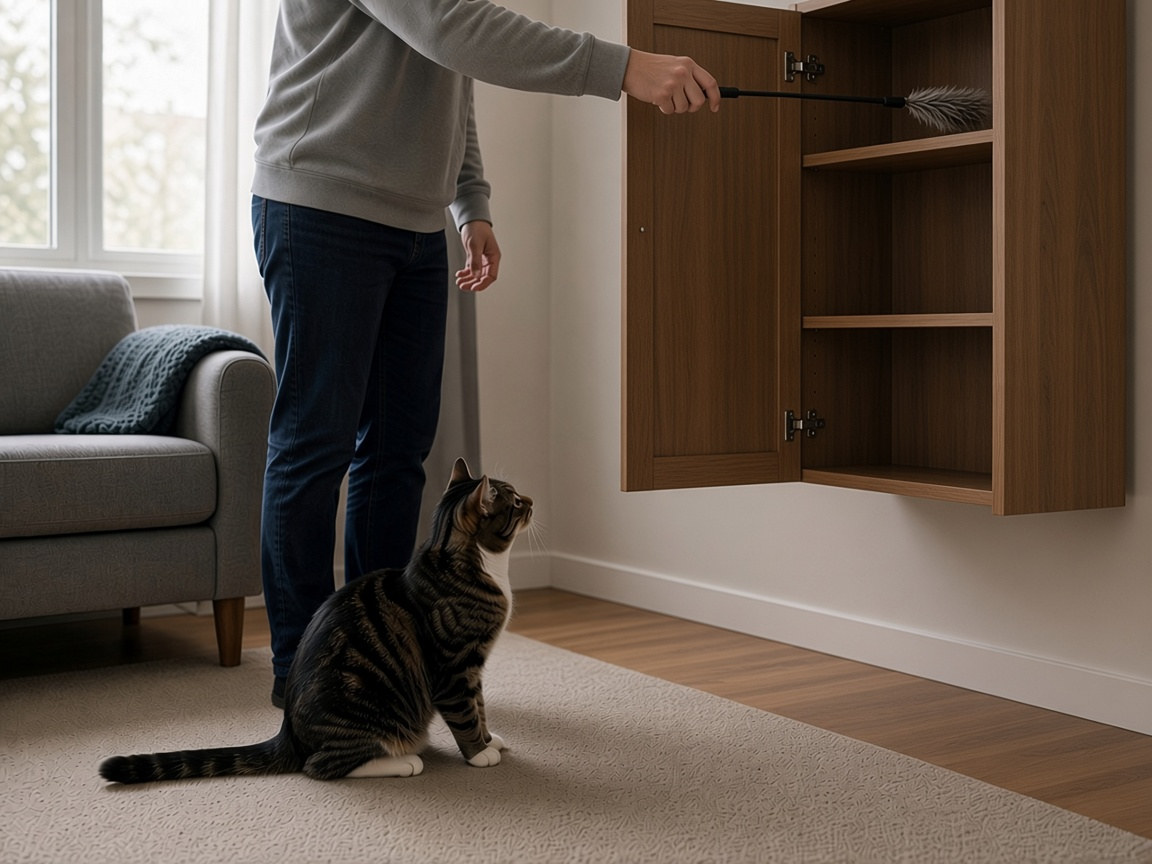
Playing only over the cat’s head, in a tight room, until they are leaping into furniture. Keep the lure low, and stop sooner.
Making the session the whole plan for a workday. A wand session when you get home still matters; it does not replace a tested automatic toy or a mealtime puzzle feeder.
Using one wand as a prize for two cats and walking away. If there is any tension, play separately, or give each cat a complete ending.
Ignoring a frayed line or a lure that is already shedding feathers and stuffing. The toy should be retired before it becomes something to swallow.
How a wand differs from nearby options
A wand is interactive because you are there, moving the lure and ending the hunt. That is different from a toy that starts itself, and different from a meal.
Interactive play for indoor cats is the situation plan: what fits a tight apartment, a multi-cat home, or a day you are not home. This page is the wand inside that plan—how to move it, when to let the cat catch, and why it has to come off the floor.
Automatic toys fill a gap while you are gone. They should be catchable, quiet enough for the room, and tested around the furniture. They do not replace a wand session, and a wand does not do their job when no one is holding it.
A laser, handheld or automatic, can start a chase and usually denies the catch. If you use one at all, finish with a physical toy or the wand lure, and never aim the light at a cat’s eyes. For everyday play, the wand is the cleaner tool because the cat can complete the hunt.
A puzzle feeder is a meal. It can share the same day as a wand session. It will not satisfy a cat that needed to hunt.
Kickers, spring toys, and balls can be part of the ending or a solo follow-up, but they do not give you the same control over the sequence. Use them as support, not as a reason to leave the wand down.
For kittens, a short wand session is still useful, and the put-away step matters more, not less. Chewing and hunting are different jobs; the teething guide covers what they can safely gum, and why a string toy should not stay out afterward.
A simple way to try one
- Clear a short path in the room you actually use. Choose a wand you can keep low in that space.
- Start with the lure on or near the floor. Let it hide, dart, and pause. Do not begin with high, fast circling.
- Let the cat catch. If they pin the lure, give them a moment with it. End on a catch, even if the session was short.
- Stop while play is still clean—often in about 10–15 minutes, sooner if the cat is already winding up.
- Inspect the line and lure. Then put the wand out of reach. Do not leave it on the floor.
If the cat only watches, try a slower session another time rather than making the lure more chaotic. If they go straight for the string, end the session and put the wand away; that cat may need a sturdier lure and closer handling, or a different toy for now.
FAQ
What is a cat wand toy? Is a wand toy for cats the same thing?
Yes. A cat wand toy is a rod, a line, and a lure you move so the cat can stalk, chase, pounce, and catch. Wand toy for cats is the same idea. It is a toy you hold. It is not an automatic toy, and it is not a laser by itself.
How should I play with a cat wand toy?
Keep the lure close to the floor, move it like prey—hide, dart, pause—and let the cat catch it before you stop. A short session in a clear path beats a long one that stays over the cat’s head. Put the wand away when you are done.
Should I let my cat catch the lure?
Yes, in most sessions. The hunt is not finished if the lure is always yanked away. Let the cat pin or hold it, then ask for a drop if you want to play a little more, and end on a catch they get to keep for a moment.
How long should a wand session last?
Short is enough. Ten to fifteen minutes is plenty for many indoor cats, and some are done sooner. Stop while the cat is still engaged, not after they are frantic or exhausted. Two shorter sessions in a day usually beat one long one.
Are cat wand toys safe?
They can be, when you stay in the room and put the wand away after play. The line, elastic, feathers, and clips are the usual risks: they can wrap, come off, or be swallowed. Inspect the lure before you play, and do not leave a string toy on the floor.
Can I leave a wand toy out when I am not home?
No. A wand on the floor is a line to chew or wrap, not a self-play toy. If you need something for the hours you are gone, that belongs with an automatic toy you have already tested in the room, not with an unattended teaser.
Can two cats play with one wand?
Sometimes, if both stay comfortable and can take turns. If one cat guards the lure or the other is pushed out, give them separate sessions, or a second way to end the hunt. Do not leave one wand down as a shared prize.
Is a laser pointer a substitute for a wand toy?
No. A laser can start a chase, but the cat usually cannot catch it. If you use a laser at all—including an automatic laser—finish with a physical lure or toy the cat can actually grab, and never aim the light at a cat’s eyes. The wand is the better tool when you want a complete hunt.
Can kittens use a wand toy?
Yes, in short, supervised sessions that end on a catch, with a lure that is not already shedding parts. Put the wand away afterward so the string and feathers do not become something to chew. If the main problem is chewing cords and toys, that is a teething issue, not a reason to leave the wand out.
My cat just watches and will not play. Now what?
Slow down, keep the lure on the floor, and add more pauses. A lure that never stops, or that stays in the air, is hard to start a hunt with. Try a short session when the cat is already alert, and end early if they catch even once. Some cats need a day or two with a new wand before they will commit.