Flirt Poles for Dogs
Flirt Pole for Dogs: How to Use One Safely, and What to Pair It With
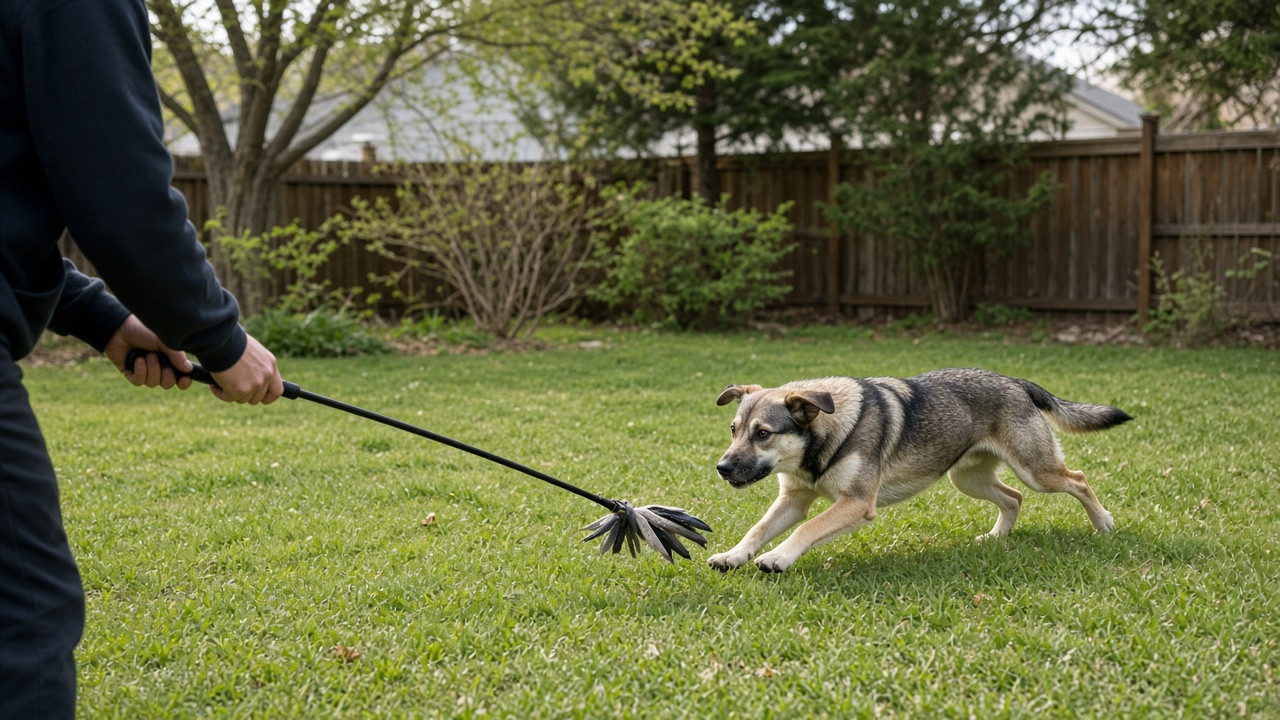
Learn how to use a flirt pole for dogs safely: size and intensity limits, shoulder and neck risks, and how to pair sessions with a snuffle mat or puzzle.
A flirt pole is a simple chase toy: a pole, a line, and a lure you drag so the dog can hunt. Used well, it burns a lot of energy in a small space and lets you control the path. Used badly, it is a hard, twisting workout for shoulders, neck, and growing joints—and it can leave a dog more amped up than when you started.
This is not a buying guide. The useful question is not “which flirt pole to get.” It is whether this dog, at this age and fitness, can chase a lure without slamming into sharp turns, and what you will do afterward to bring the arousal back down. A short session, a lure kept low to the ground, a real catch, and a calmer follow-up—such as a snuffle mat or a puzzle—is usually a better plan than a longer, wilder chase.
When a flirt pole is the right tool
A flirt pole helps when you have a dog that likes to chase, you can handle the pole with control, and you have a clear, non-slip surface big enough for a horizontal run—not a sequence of leaps.
It is a good fit for:
- A healthy adult dog with a strong chase drive, when you want a short, intense outlet.
- Days when a long walk is not possible, but you still need to take the edge off.
- Handlers who can keep the lure on the ground, let the dog catch it, and stop the game on cue.
- Households that already have, or will add, a quieter activity to use right after: sniffing, a food puzzle, or a chew.
It is the wrong tool, or the wrong time, when:
- The dog is still growing, especially a large or giant breed, and the game would involve jumping, twisting, or sudden stops. Growing joints do not need that kind of repeated impact. If you use a pole at all with a young dog, keep the lure on the ground, keep the session very short, and ask your veterinarian what is reasonable for that dog.
- The dog already has shoulder, neck, back, or knee issues, or is recovering from an injury. Skip it until a veterinarian says otherwise.
- The dog cannot stop, drop the lure, or disengage once the chase starts.
- You are on a slippery floor, a cramped room full of furniture, or a hard surface where a hard stop will jar the joints.
- Two dogs would be chasing the same lure. That is a collision and a fight risk, not a game.
- The dog is flat-faced and already working hard to breathe, or the weather is hot. Chase is cardiovascular work. Stop at the first sign of noisy or labored breathing.
A flirt pole is also the wrong answer if what the dog actually needed was sniffing, chewing, or time to settle. High-arousal play does not automatically produce a calm dog.
How to use one without overdoing it
Keep the lure low
The safest, most useful motion is a drag close to the ground: forward, side to side, with pauses. The dog should run, pounce, and catch, not leap and twist in the air after a lure you keep just out of reach.
High, whipping arcs look exciting and load the shoulders, neck, and spine on the landing. Tight spins at speed do the same. If you catch yourself lifting the lure to “make it more fun,” put it back down.
Match the gear to the dog and to you
The pole, the line, and the lure have to fit both ends of the game.
A small dog can be yanked off balance by a heavy lure or a stiff, oversized pole. A large, powerful dog can snap a light pole, pull you off your feet, or turn a short line into a sudden neck-jarring stop. You should be able to hold the pole with two hands, change direction without jerking the dog’s mouth, and keep the lure in a predictable lane.
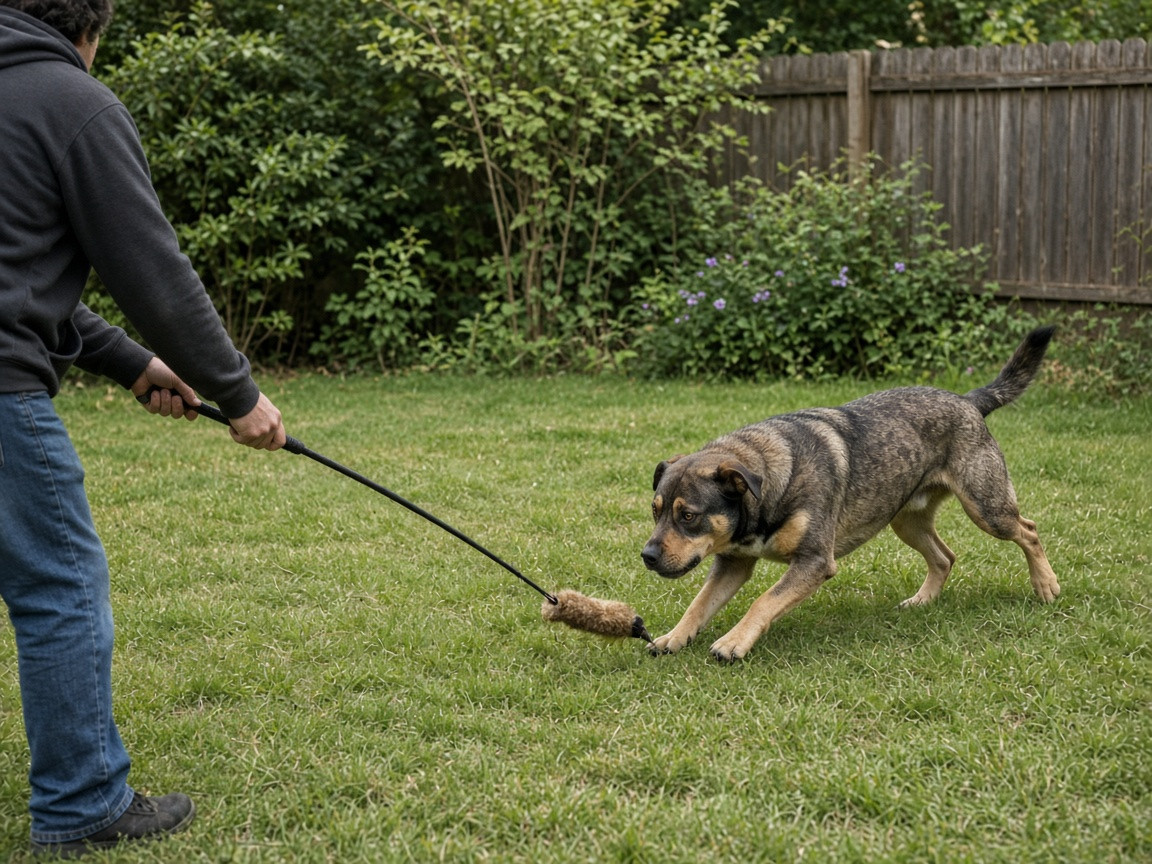
The lure should be something the dog can actually grab and, if they are a shredder, something you can inspect and replace. If they swallow stuffing or torn pieces, this is not the toy to leave in their mouth unsupervised—and it may not be the right lure at all.
Let the dog catch, then ask for a drop
A session that is only “almost, almost, almost” is frustrating, and a session that is only a wrestling match with the lure is no longer a chase. Build a rhythm: drag, pause, catch, a brief reward of holding or a short tug if the dog likes it, then a cue to drop and start again.
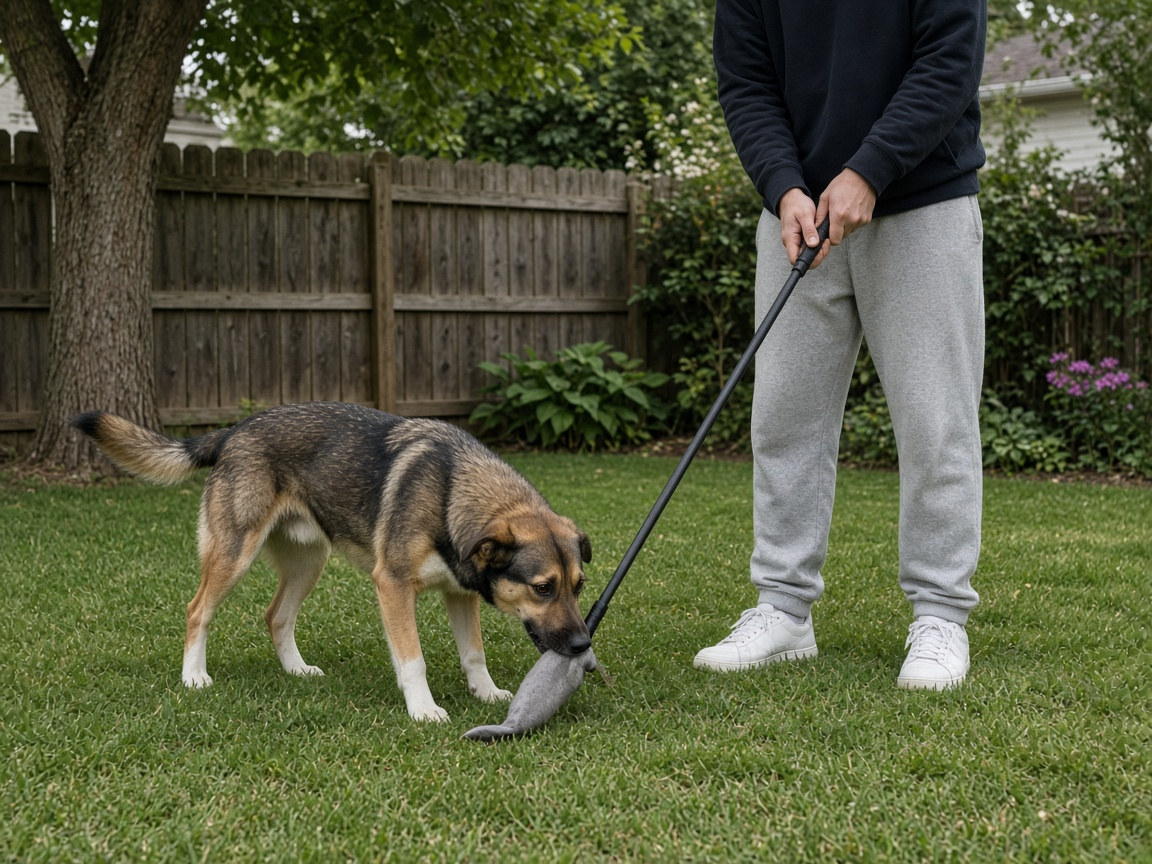
Teach the drop when the dog is only mildly excited, not at peak frenzy. If you cannot get the lure back without a fight or a hard yank, you do not yet have a safe game. Yanking a lure out of a clamped jaw loads the neck and teeth. Wait, trade for a treat, or end the session.
Keep it short and end before the peak
For many dogs, five to ten minutes is plenty, and two short sessions beat one long one. Stop while the dog can still think: they can drop, they can pause, they can come off the lure when you ask.
If the dog is mouthing you, ignoring the drop, slamming into the end of the line, or unable to settle, the session already went too long or too hot. End it. Do not try to “tire them out” past that point. An over-aroused dog is not getting better exercise. They are practicing being out of control.
Choose the surface and the space
Use a place with traction and room to run in a straight or gently curved line: grass, a clean yard, or another non-slip outdoor surface. Tile, hardwood, and tight indoor hallways turn a chase into slipping, crashing, and furniture collisions.
You also need space around you. The pole can hit a person, wrap a leg, or clip a face if a dog cuts in close. If children are present, this is a game for one handler and one dog, with everyone else out of the lane.
Come down after the chase
This is the part most “fun with a flirt pole” pages skip, and it is half of the plan.
A flirt pole turns the chase system up. Sniffing and slow food work help turn it down. After you end the session, switch to a quieter job: a snuffle mat, a lick mat, a puzzle the dog already knows how to solve, a scatter of food in the grass, or a short sniff walk. The point is not to pile on more intensity. It is to give the dog a way to use their nose and finish the day in a lower gear.
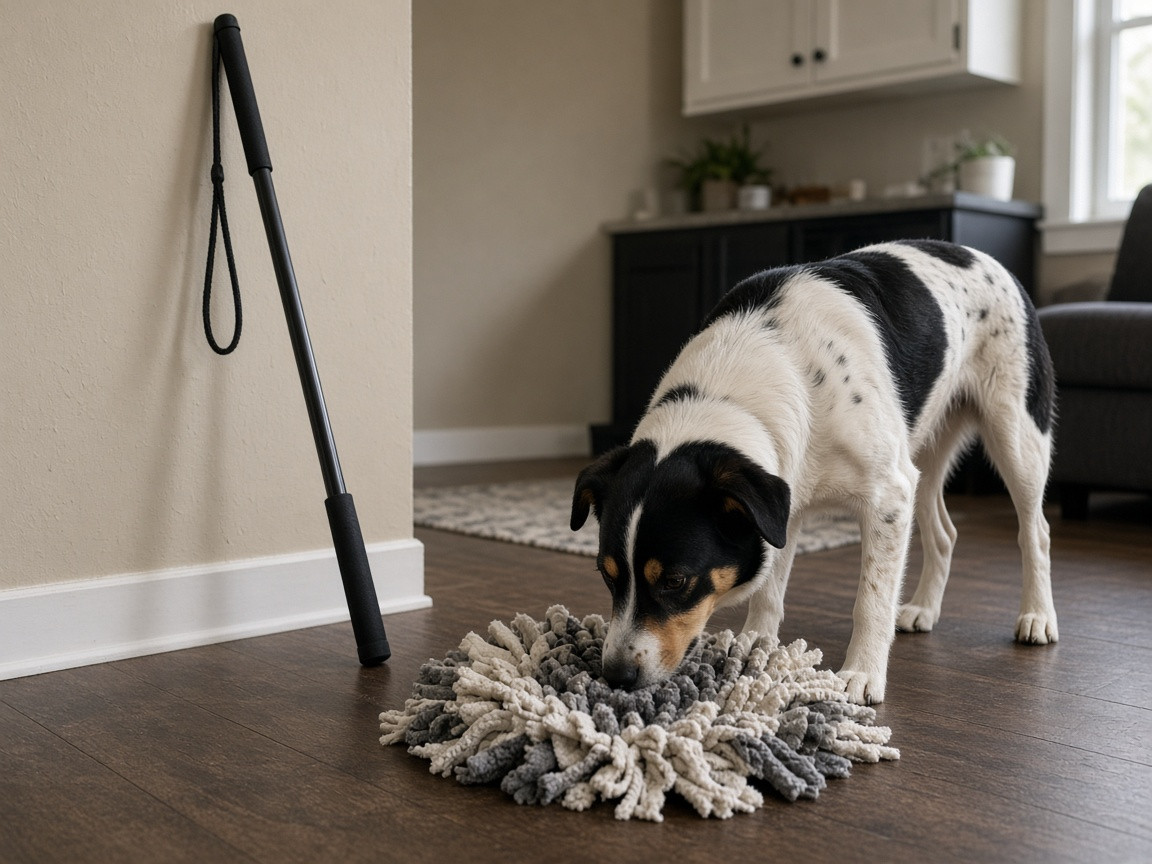
If your dog cannot transition—if they pace, scream for the pole, or cannot eat—the chase session was too strong. Shorten it next time, and make the cool-down the part you protect, not the part you skip.
Common mistakes
Keeping the lure just out of reach for the whole session, so the dog never catches and never comes down.
Encouraging big jumps and tight mid-air turns because they look impressive.
Playing at full intensity with a young, still-growing dog, or with a dog whose shoulders, neck, or knees are already a concern.
Running the game on a slippery floor or in a cluttered room.
Using the flirt pole as the only outlet for a high-energy dog, day after day, with no sniffing, chewing, or slower work.
Letting two dogs chase one lure, or playing while the dog is already over the threshold from a previous game of fetch.
Yanking the lure out of the dog’s mouth, or ending the session at the moment of peak frenzy instead of on a drop and a settle.
Choosing a pole you cannot control, or a lure the dog will shred and swallow.
How a flirt pole differs from nearby options
A flirt pole is not fetch. Fetch often includes hard stops, tight turns, and a dog slamming after a ball. A pole gives you more control over the path, which is the whole safety advantage—if you actually use it to keep the lure low and the turns wide. If you whip the lure the way some people throw a ball, you have the same impact problem with a different object.
It is not the same as tug. Tug is a hold-and-pull contest. A flirt pole is a chase that may end in a brief tug. If every catch turns into a long, shaking fight, you have changed the sport, and you have changed the load on the neck and shoulders.
It is not a snuffle mat or a puzzle. Those are slower, nose- and brain-heavy jobs. They do not replace a chase for a dog that needed to run, and a chase does not replace them for a dog that needed to sniff and settle. Used in sequence, they cover different parts of the day. A snuffle mat is often the better cool-down. A puzzle is useful later, or on a rest day when joints need a break from impact.
It is not a walk. Moving through the world, sniffing, and pacing themselves still matter. A five-minute pole session can take the edge off. It should not become the reason the dog never gets to use their nose outside.
A simple session shape
- Warm up with a minute of easy movement, not a cold, all-out sprint.
- Drag the lure on the ground in a clear, non-slip lane. Pause. Let the dog catch.
- Ask for a drop. Restart only if the dog can still think.
- End after a few minutes, while the drop still works, not after the dog is frantic.
- Put the pole away. Offer a snuffle mat, a familiar puzzle, or another quiet sniffing job, and let the dog come down.
If that shape fails—if the dog cannot drop, cannot slow down, or seems sore afterward—change the intensity or stop using the pole. Do not “fix” it with a longer session.
FAQ
What is a flirt pole for dogs?
A pole with a line and a lure on the end, used like a giant wand. You drag the lure so the dog can chase, pounce, and catch. It is a high-intensity game, not a self-serve toy you leave on the floor.
Are flirt poles safe?
They can be, if you keep the lure low, match the gear to the dog, keep sessions short, and skip the game for dogs that should not do repeated jumping, twisting, or hard stops. They are not automatically safe because they are “just a toy.” The risk sits in the shoulders, neck, growing joints, over-arousal, and the occasional collision.
Can puppies use a flirt pole?
Be conservative. Young, growing dogs—especially large and giant breeds—should not be encouraged to jump, twist, or slam to a stop after a lure. If a veterinarian is comfortable with any chase play at all, keep the lure on the ground, keep the session very short, and stop early. Full-intensity pole work is a poor idea while the dog is still growing.
What about large dogs, small dogs, or seniors?
Large, powerful dogs need a pole and line you can actually control, and wide, low turns rather than sudden stops. Small dogs need a lure and line that will not yank them off their feet. Seniors, and any dog with joint or neck issues, may do better with slower enrichment—sniffing and puzzles—than with a chase. When in doubt, ask your veterinarian before you add impact.
How long should a session last?
Shorter than most people think. Five to ten minutes is enough for many dogs. Two short sessions are usually better than one long one. The right end point is “the dog can still drop and settle,” not “the dog is exhausted.”
Should I let my dog catch the lure?
Yes, often. A catch completes the sequence and gives you a chance to ask for a drop. A game of endless near-misses is frustrating and harder to turn off. Just do not follow every catch with a long, violent tug, and do not yank the lure out of the mouth.
Will a flirt pole make my dog more reactive or prey-driven?
It practices chase at high arousal. For some dogs, that stays neatly inside the game. For others, it spills into barking, mouthing, or a harder time calming down around movement. If your dog cannot come off the lure, or is wound up after every session, shorten the game and put more weight on the cool-down. A flirt pole is a poor choice as the only daily outlet for a dog that already struggles to settle.
Can I use a flirt pole indoors?
Only if you have a non-slip surface and a clear lane. Most indoor floors and most furnished rooms make this a slipping and crashing game. Outdoors on grass or another surface with traction is usually the better default.
Can two dogs play with one flirt pole?
No. One handler, one dog, one lure. A second dog in the lane raises the risk of collisions, guarding, and a fight over the catch.
What should I do after a flirt pole session?
Put the pole away and switch to something slower: a snuffle mat, a puzzle the dog already understands, a food scatter, or a short sniff walk. The chase turns energy and arousal up. The next activity should help them come down, not wind them up again.