Indoor Cat Toys
How to Use an Automatic Laser Cat Toy—and When to Skip One
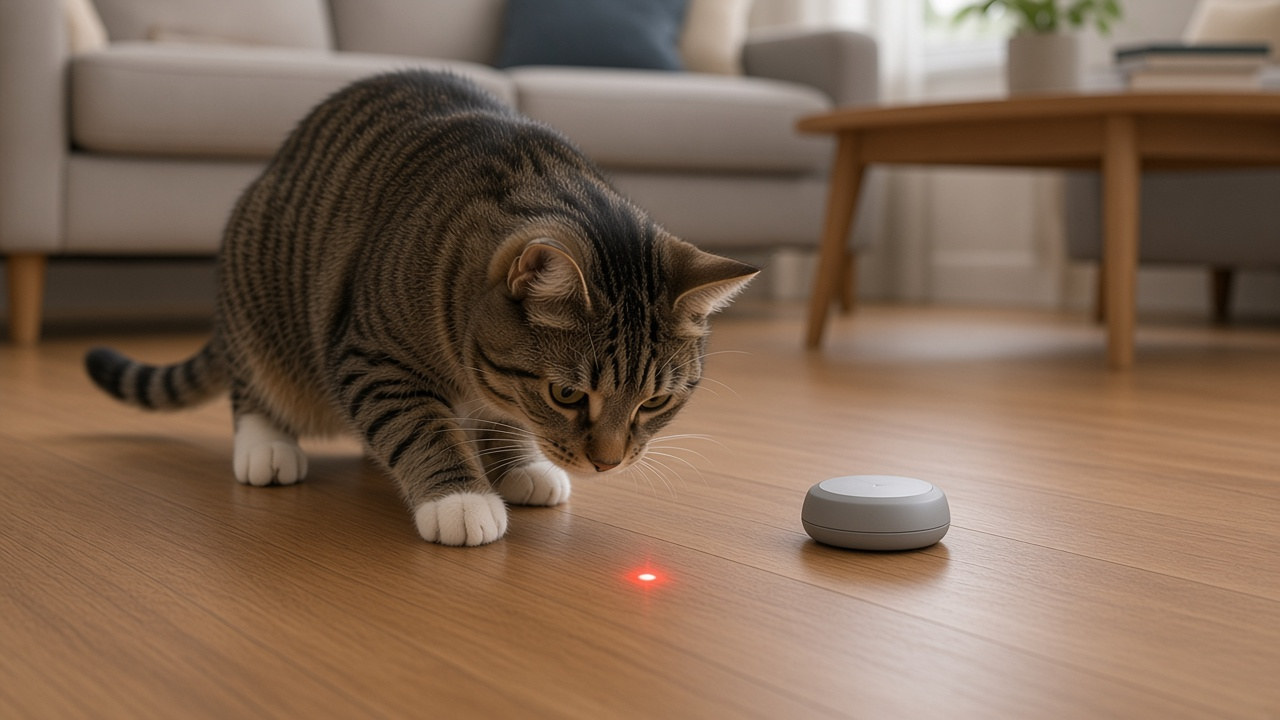
How to use an automatic laser cat toy safely: keep the beam on the floor, end the chase with something the cat can catch, and skip leaving it on unsupervised.
An automatic laser cat toy is a timed or motorized unit that moves a laser dot so the cat can chase it without you holding a pointer. It can start a hunt. It does not finish one.
The sessions that go less badly are short, supervised, aimed at the floor, and ended with a physical toy or a treat the cat can actually grab. The ones that go badly leave a wandering beam on in an empty room, point near a face, or treat the light as a complete play session.
This guide is about how to use an automatic laser cat toy safely, how a timed unit differs from a handheld pointer, and when to skip one. It is not a ranked list, and it is not a second guide to choosing automatic toys for indoor cats left alone. How to run a complete hunt with something the cat can catch belongs with the wand toy guide.
When an automatic laser is the right tool
An automatic laser is most useful when you want a short chase, and you can finish it yourself:
- You are in the room. You can see where the beam goes, and you can turn the unit off.
- The unit can be placed so the light stays on the floor, along a clear path, not at eye level.
- You have a wand, a toy, or a treat ready so the session can end on a catch.
- The cat enjoys the chase and will still take a physical object afterward.
It is the wrong tool, or the wrong moment, when:
- No one will be home. An automatic laser can create the hunt without the catch, which is the opposite of what a solo session should provide. For time when you are not home, a toy with a real object the cat can bat is the better fit.
- You wanted a complete hunt you can slow down, speed up, and end on a catch. That is a wand, not a light.
- You cannot keep the beam on the floor, or the unit wanders toward walls, glass, or faces.
- The cat stays frantic after the light is gone, or keeps sniffing the floor as if the prey is still there.
- Two cats will have to share one moving dot while you walk away.
- A kitten will be left with the unit to chew, or you hoped the laser would tire them so you could leave.
A skip is not a failed play session. A wand or a physical automatic toy is a successful outcome when a laser would only start a chase you cannot finish.
How to use one without leaving the hunt unfinished
1. Treat it as a chase starter, not a workday toy
Store pages often file automatic lasers with automatic cat toys. The jobs are not the same.
A physical automatic toy can be batted, pinned, or caught. A laser cannot. Use the light to begin a short chase, then hand the hunt to something real. Do not turn the unit on as you walk out the door and call that enrichment.
A timer or auto shutoff is useful. It keeps a supervised session from running on. It does not make unsupervised use safe.
2. Keep the beam on the floor, and never at eyes
Do not aim a laser at a cat’s eyes, or at a person’s. That rule does not change because the unit is automatic.
Place the toy so the sweep stays low, along a short, clear path. Avoid stairs, tight gaps, and a beam that climbs furniture toward a face. Be cautious with automatic lasers that wander, and with shiny floors or glass that can bounce the light; the cat may look into the source.
If you cannot predict or limit where the dot will go, do not use that unit. A handheld pointer is easier to keep on the floor—but only if you actually keep it there, and only if you still end on a catch.
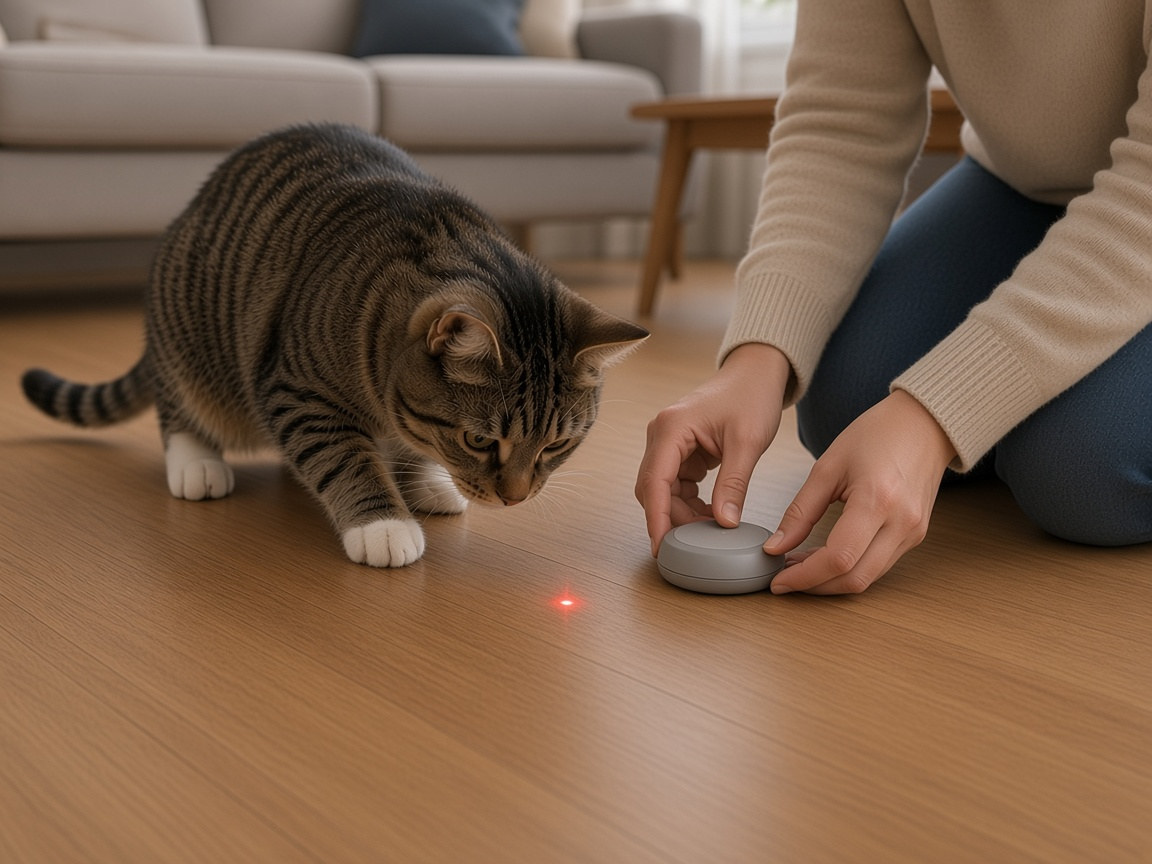
3. Stay in the room, and keep the first sessions short
Watch the first uses. You need to see whether the cat enjoys the chase, whether the beam stays low, and whether the cat will take a toy when the light stops.
Start shorter than the product video looks. A brief chase that ends on a catch is more useful than a long loop the cat cannot finish. If the cat leaves, looks away, or starts to get frantic, turn the unit off. You can always do less.
Introduce a new unit while you are there. Do not find out how it behaves by leaving it running in another room.
4. End the session with something the cat can catch
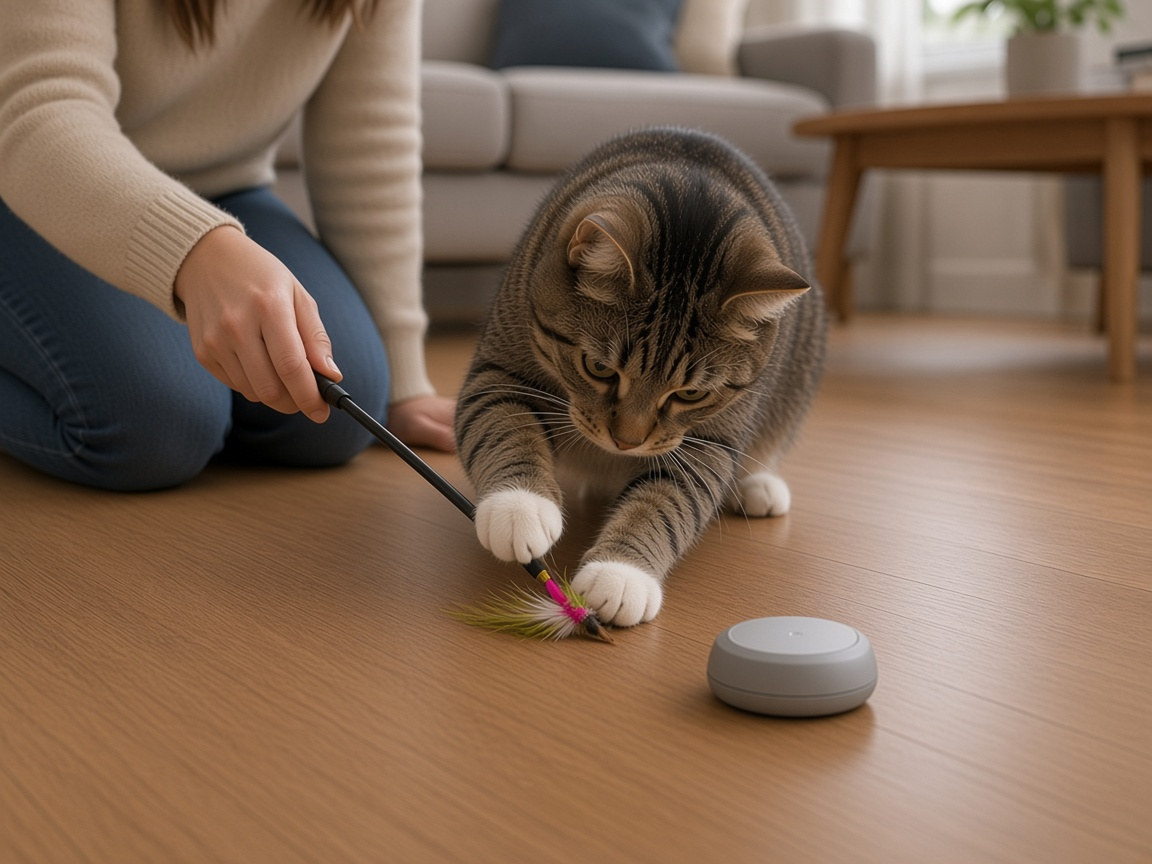
The hunt is not finished when the light goes off. Offer a wand lure, a toy the cat already likes, or a treat they can actually grab, then let them pin or hold it.
Some cats stay amped up or keep searching the floor after a laser. That is a reason to end sooner, and to make the physical catch obvious, not a reason to run the light longer. If they still cannot settle, skip lasers and use a toy that was catchable from the start.
A 60-second burst of light with no catch is not a play session. Most indoor cats do better with a short hunt they can finish than with a sprint that ends in midair.
5. Turn it off, and put the unit away
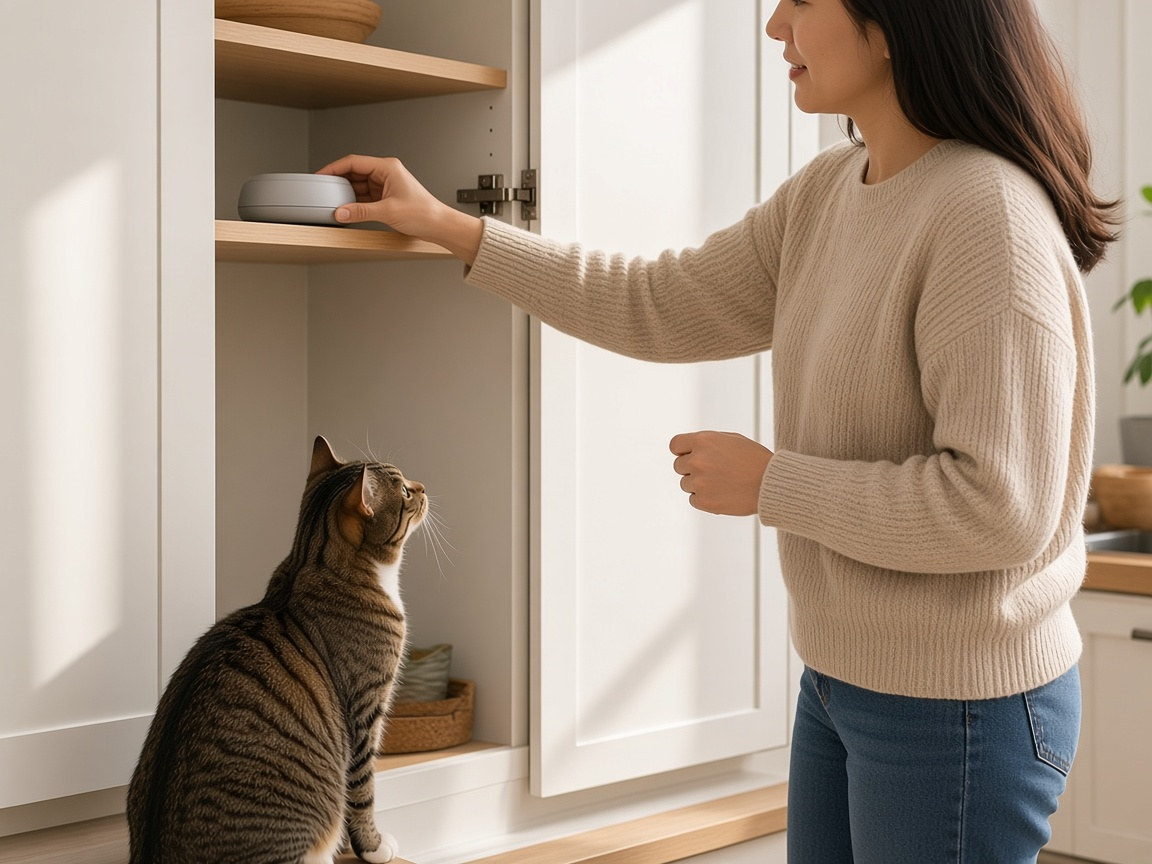
When the chase is over, shut the laser off and put the unit where the cat cannot chew it or turn it back on. A device left on the floor is a cord, a plastic shell, and sometimes a light that starts again.
If you also used a wand, put that away too. The laser does not change the rule that a line and lure should not be left out to chew.
When to skip one, or use something else
You do not have to own an automatic laser cat toy. Many indoor cats are better served by a wand you hold and, for hours when you are out, a physical automatic toy.
Skip the laser if you cannot supervise it, if you cannot keep the beam on the floor, or if your cat is one of the ones who stays restless and hunts the empty floor afterward. Skip it in a multi-cat room if one cat guards the game or the other is shut out.
If what you wanted was a toy that can run for a while without you, go back to the automatic toy guide and choose for a catchable object, furniture, noise, and power. Do not use this page as a second shopping checklist for “self-playing” toys. An automatic laser is a different job, and it is a weak one to leave unsupervised.
If what you wanted was play you share, use the wand. You can still use a laser as a brief opener, as long as the wand—or another real object—closes the hunt.
Common mistakes
Leaving an automatic laser running when no one is home, then calling the timer a play plan.
Ending when the light stops, with nothing the cat can catch.
Aiming at walls, ceilings, or eye level, or placing a wandering unit where you cannot see the beam.
Using the laser as a substitute for a wand, or as the only play an indoor cat gets.
Calling a frantic 60-second sprint a session, then leaving for work.
Forcing two cats to share one moving dot, or walking away from the first scramble.
Leaving the unit out for a kitten or a bored cat to chew, or to restart.
How an automatic laser differs from nearby options
A handheld laser pointer is the same job with more control. You can keep the dot on the floor and stop at once. An automatic laser cat toy moves the dot for you, which is the appeal and the risk: it can wander, and it is easier to leave on. In both cases, the cat usually cannot catch the light. The safety rules are the same.
A physical automatic toy is for solo time: a real object the cat can bat, with the usual checks for furniture snags, noise, and battery life. It is not a laser with a nicer name. If you are choosing something to leave running while you work, use that checklist, not a timed beam.
A wand toy is for when you are there. You control the pace and the catch. A laser can precede that hunt. It should not replace it.
Interactive play for indoor cats is the broader plan—apartments, multi-cat homes, and days with no one home. A laser is only a small, supervised piece of that plan, and a weak unsupervised one.
A puzzle feeder occupies a different drive: working for food. It will not satisfy a cat that needed to hunt, and a laser will not satisfy a cat that needed a meal.
A simple way to try one
- Place the unit so the beam stays on the floor, along a short, clear path. Stay in the room.
- Run a brief chase. If the cat leaves or the beam wanders up, shut it off.
- The moment the light stops, offer a wand, a toy, or a treat the cat can actually grab, and let them catch it.
- Turn the unit off and put it away. Do not leave it looping, and do not leave it out.
- If the cat chased, caught the real object, and settled, you can use the same short pattern again. If they stay frantic, search the floor, or ignore the catch, skip the laser and use a toy that was physical from the start.
If you needed something for the hours you are gone, stop here and choose a catchable automatic toy instead. An automatic laser cat toy is not that tool.
FAQ
What is an automatic laser cat toy?
A timed or motorized unit that moves a laser dot so the cat can chase it without you holding a pointer. It can start a hunt. It does not finish one, because the cat usually cannot catch the light. The same safety rules apply as with a handheld pointer: keep the beam on the floor, never aim at eyes, and end with something the cat can actually grab.
Is an automatic laser cat toy safe?
It can be a fair, short, supervised chase if the beam stays on the floor, you are in the room, and you end the session with a physical toy or a treat. It is a poor choice if the unit wanders toward faces, has no way to shut off, or is left running in an empty home. Safety is about how you use it, not about the word automatic.
Can I leave an automatic laser cat toy on when I am not home?
No. An automatic laser can create the hunt without the catch, which is the opposite of what a solo session should provide. A timer or auto shutoff is useful so a session does not run on while you watch. It is not a babysitter. For time when you are not home, use a toy with a real object the cat can bat.
How is an automatic laser different from a handheld laser pointer?
The job is the same: a chase the cat usually cannot catch. The difference is control. With a handheld pointer, you can keep the dot on the floor and stop at once. An automatic unit can wander, keep running, and is easier to leave on by mistake. Neither one replaces a toy the cat can grab.
Should I let my cat catch the laser?
The cat usually cannot catch the light, and that is the problem. End the session with a wand, a toy, or a treat the cat can actually pin or hold. Do not try to solve it by making the laser faster, and do not stop the moment the light goes off if the cat is still searching the floor.
Is an automatic laser a substitute for a wand toy?
No. A wand lets you slow down, speed up, let the cat catch, and stop before the session goes frantic. A laser can start a chase, but it does not complete the hunt. If you use a laser at all, finish with a physical lure or toy, then put both away.
Where should I aim an automatic laser cat toy?
Keep the beam on the floor, along a short, clear path. Do not aim at a cat’s eyes, a person’s eyes, or a surface that bounces the light toward a face. Place the unit so the sweep stays low. If you cannot control where it points, do not use it.
Can kittens use an automatic laser cat toy?
Only in short, supervised sessions that end on a physical catch, and only if you can keep the beam on the floor. Do not leave the unit out for a kitten to chew, and do not use a laser as a way to tire a kitten while you leave the room.
Can two cats share one automatic laser?
Usually, no. One moving dot is easy to collide over, and one cat may chase while the other is shut out. If you try it at all, stay in the room and stop at the first sign of guarding or a scramble. Separate short sessions, each ending on a real catch, are the safer plan.
My cat keeps hunting the floor after the light stops. Now what?
That is a reason to change how you end the session, or to skip lasers. Offer a physical toy or a treat the moment the light goes off, and keep the chase short. If the cat still stays frantic or searches the floor, this is not their tool. Use a wand or another toy they can actually catch.