Snuffle Mats for Dogs
Snuffle Mat for Dogs: How to Use One, Who Should Skip It, and What to Use Instead
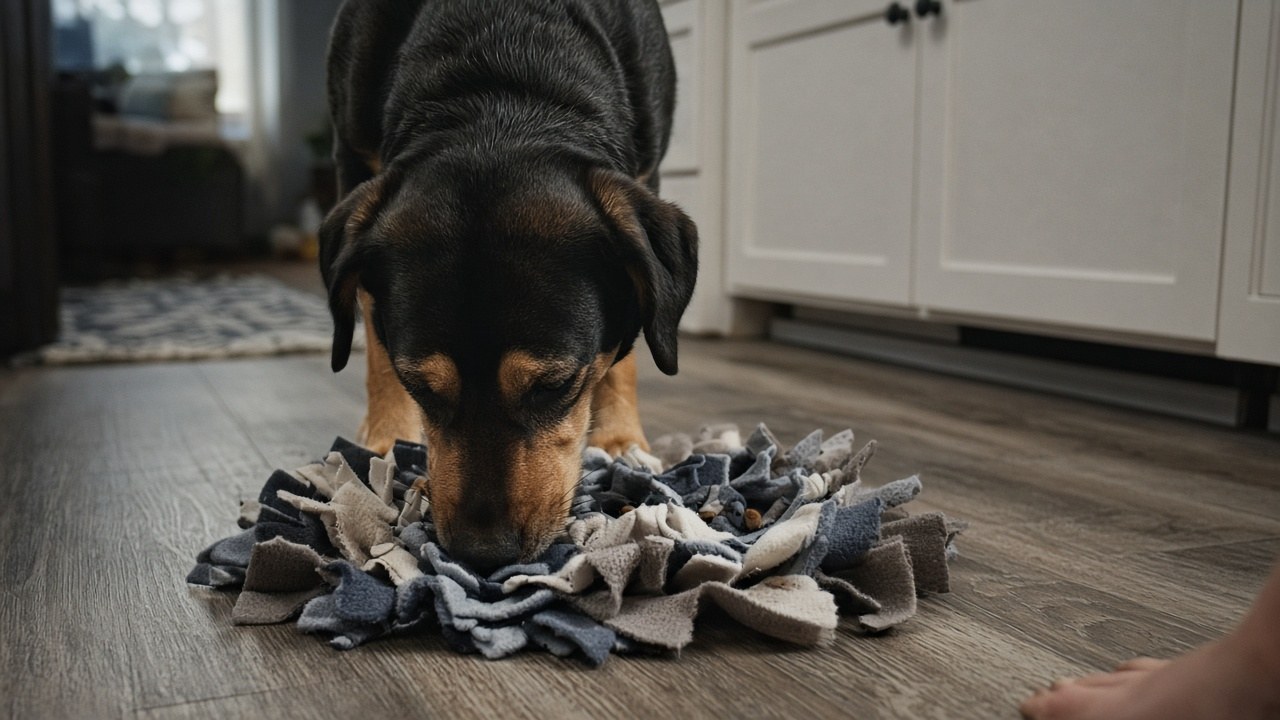
How to use a snuffle mat for dogs: setup, cleaning, and session length; which dogs should skip it; and how it differs from slow feeders or puzzle toys.
A snuffle mat is a simple foraging toy: a fabric mat with strips or folds where you hide kibble or small treats, and the dog uses their nose to find them. Used well, it slows a meal, gives an indoor dog a job, and helps a wound-up dog come down after a chase. Used badly, it becomes a fabric snack, an unwashed germ sponge, or a resource to guard.
This is not a “best snuffle mats” list. The useful questions are how to use one, which dogs should not use one, and when a slow-feeder bowl or a puzzle toy is the better tool for the same meal.
When a snuffle mat actually helps
A snuffle mat is most useful when the job is sniffing and searching, not running or solving a mechanical puzzle.
It is a good fit for:
- A dog that inhales meals and needs to slow down, but still enjoys using their nose.
- Indoor days, short evenings, or the stretch after you get home, when you want a quiet job rather than another high-arousal game.
- A cool-down after a short chase, such as a flirt pole session kept low to the ground: the pole turns the dog up, and foraging can help turn them back down.
- Dogs that need mental work with little impact on joints—seniors, recovering dogs whose veterinarian has cleared gentle activity, or dogs that should not jump and twist.
- A single-dog household, or a multi-dog home where you can give each dog their own mat in a separate space.
It is the wrong tool when the dog is likely to shred and swallow fabric, when two dogs would be competing over one mat, or when you need a durable, easy-to-clean way to serve every meal. Those cases belong to a slow feeder or, if the dog likes problem-solving, a puzzle—not to a deeper pile of fleece.
How to use a snuffle mat
Start easier than you think
The first sessions should be easy enough that the dog wins. Sprinkle kibble or treats so some pieces are visible on top of the folds, and let the dog discover that the mat pays. Once they are searching, tuck food deeper. If you start at maximum difficulty, many dogs paw, shred, or walk away.
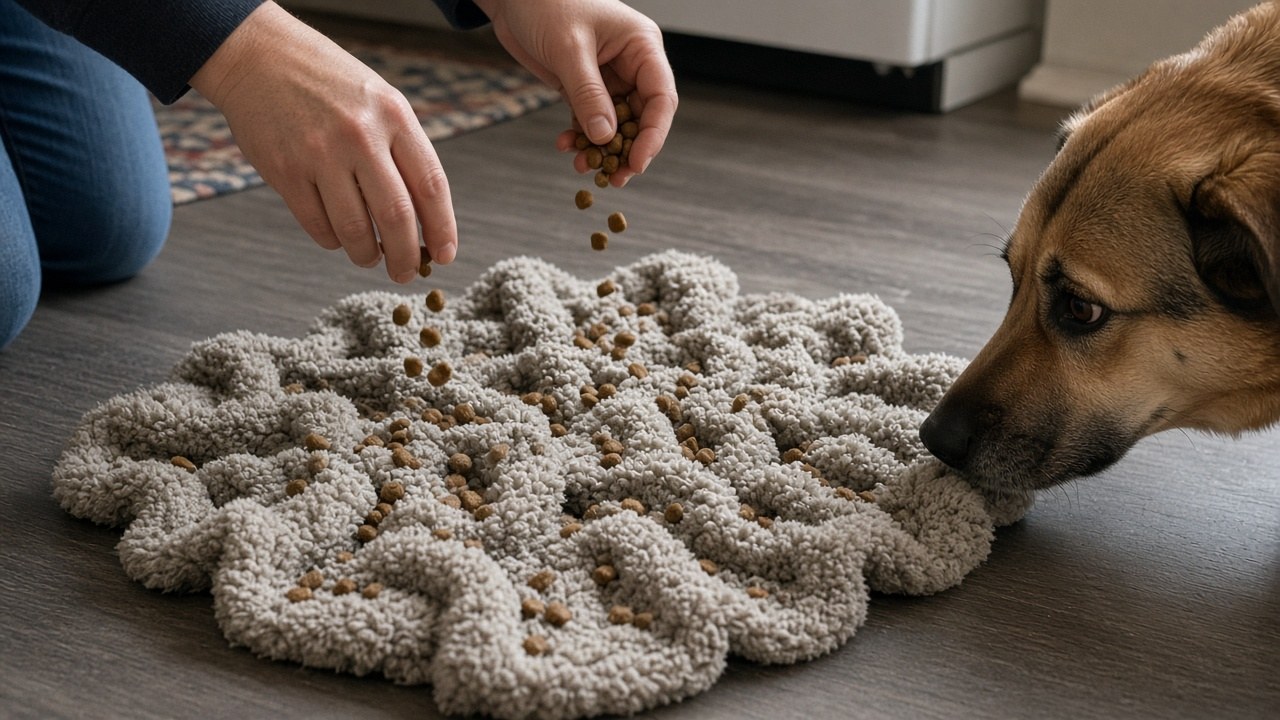
Use the dog’s regular kibble when you can, or very small treats, and subtract that food from the day’s total. A snuffle mat feels like enrichment. It is still calories.
Set it up so the search stays on the mat
Place the mat on a non-slip surface the dog can stand on comfortably. If they flip or drag it, hold a corner, put it in a low tray, or choose a mat with a backing that stays put. The point is a nose-down search, not a shake-and-dump.
Keep sessions short at first, often ten to fifteen minutes, or simply one meal’s worth of kibble. You do not need to leave the mat out all day. A toy that is always available, always smelling like food, loses its job and gets harder to keep clean.
Supervise until you know what they do with the fabric
Watch the first week. Some dogs only sniff. Some start to mouth the strips, then pull, then swallow. If the mat is coming apart, or if you find wet scraps, stop using it. A foraging toy is not worth an obstruction.
In a multi-dog home, give each dog their own mat, in their own space, and pick the mats up when the session ends. One mat in the middle of the room is a common setup for guarding.
Wash it like something that holds wet food
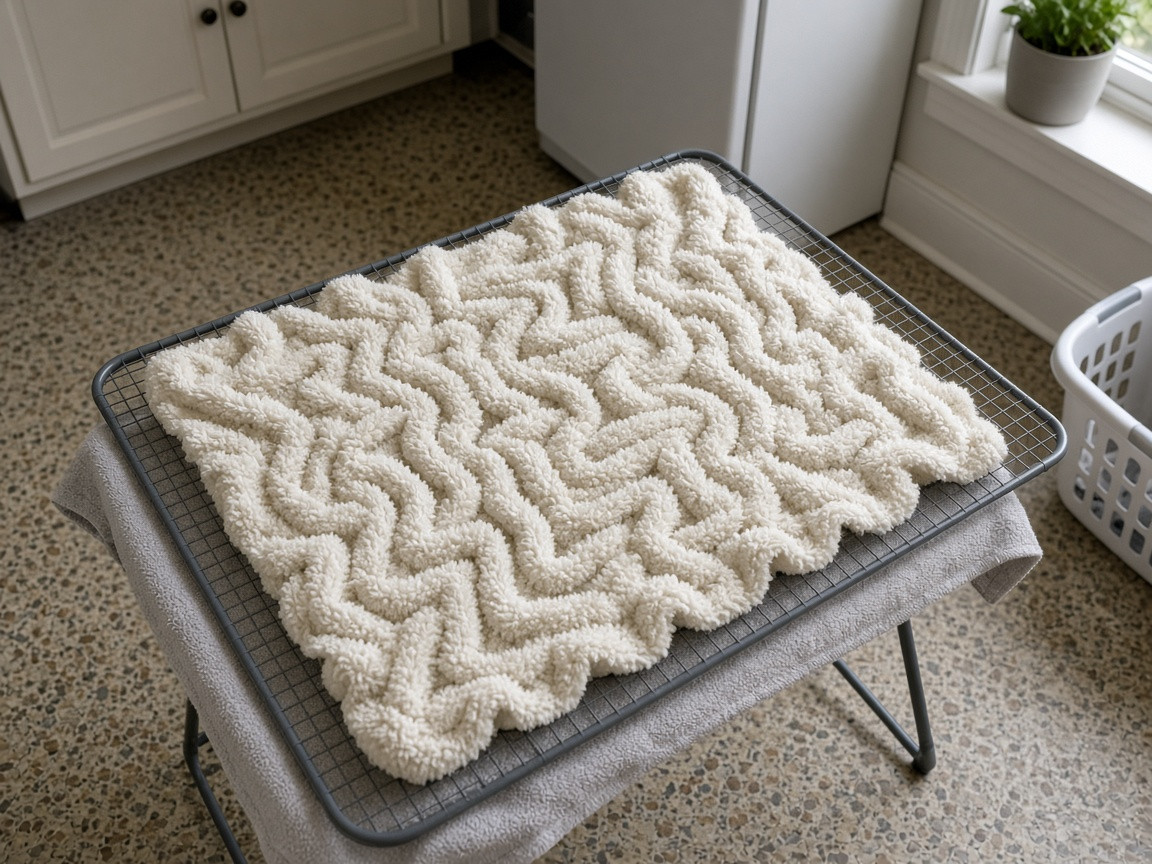
Food and saliva stay in the folds. A damp mat left in a pile can smell, attract pests, and get grimy fast. Shake out loose crumbs after each use, and wash it regularly according to the material—often more often than you think, especially in warm weather or if you have used moist food.
Do not leave wet food tucked in the mat and walk away for hours. If you want to use anything other than dry kibble or dry treats, stay present and wash the mat afterward.
Adjust difficulty instead of adding more toys
If the dog finishes in thirty seconds, hide the food deeper, use a larger mat, or spread the same meal over two short searches. If they stall or get frustrated, make the next session easier and end on a find. The mat should stay interesting because the search changes, not because it never leaves the floor.
Which dogs should skip it
Skip a snuffle mat, or use it only with close supervision and a plan to retire it, if:
- The dog shreds fabric, fleece, rubber backing, or stuffing and may swallow the pieces. This is the main deal-breaker.
- You cannot supervise, and you do not yet know whether this dog will eat the mat.
- Two or more dogs would be left to share one mat. Search and food in the same object can trigger guarding.
- The dog becomes more agitated, not calmer: frantic digging, snapping at the mat, or not being able to stop. For those dogs, a slower, more contained meal tool may be kinder.
- A veterinarian has asked you to avoid nose-down foraging for a medical reason, or the dog is recovering from an injury where standing and searching is uncomfortable.
Flat-faced dogs can often use a snuffle mat, but watch their breathing and keep the first searches easy and short. Puppies can use one if the treats are an appropriate size and you are watching for chewing on the mat itself. Neither group should be left alone with it until you know it stays in one piece.
A dog that only wants to gulp, and never sniffs, may also be a poor match. They will try to dump the mat or shred it to get the food out faster. That dog often does better with a slow-feeder bowl.
How it should share the job with other tools
This is the comparison most “best of” lists skip, and it is the decision you actually have to make at mealtime.
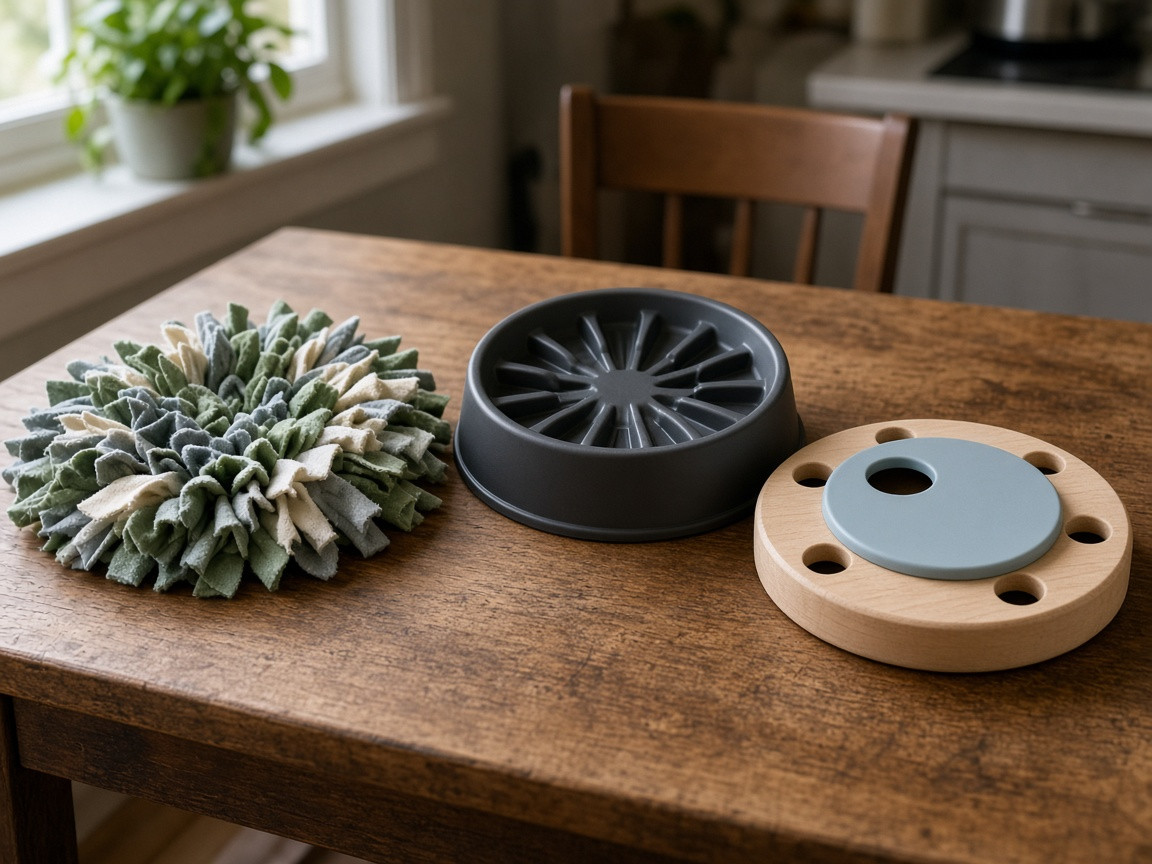
A snuffle mat is for foraging. The value is the search: nose work, a slower meal, and, for many dogs, a calmer state afterward. It is softer, harder to sanitize than a bowl, and easier to destroy.
A slow-feeder bowl is for slowing down a meal with less theater. It is usually more durable, easier to wash, and more practical as an everyday dish. It offers less sniffing and less of a “job.” If your only problem is speed-eating, and your dog would wreck a mat, start here. If your problem is a bored indoor dog that needs to use their nose, the mat does a job the bowl will not.
A puzzle toy is for problem-solving. The dog has to figure out a sliding piece, a hidden compartment, or a sequence. That is a different kind of work, and it can be more frustrating. Puzzles also come in difficulty levels, which is useful once a snuffle mat is no longer a challenge. They are not automatically better, and they are a poor cool-down if the puzzle is still hard enough to wind the dog up. Use a familiar, easy puzzle after a chase if you do not have a mat; save harder puzzles for a separate window, or for a rest day when you want brain work without impact.
Lick mats and chews occupy still another slot: repetitive, often soothing, not a search. They can follow a meal. They do not replace foraging or a puzzle.
A practical split looks like this: most meals in a slow feeder if you need something washable and daily; a snuffle mat a few times a week, or as a cool-down, when you want a search; a puzzle when you want the dog to think. After a flirt pole or a game of fetch, choose the easiest sniffing option you have, not the hardest puzzle.
Common mistakes
Buying a mat because it appeared on a “best of” list, then leaving it with a dog who eats fabric.
Using extra treats on top of full meals and wondering why the dog is gaining weight.
Leaving the mat out all day, or leaving wet food in the folds.
Never washing it, or washing it so rarely that it stays sour.
Starting at a difficulty the dog cannot win, then deciding “snuffle mats don’t work.”
Putting one mat down for two dogs and walking away.
Using the mat as a substitute for walks, sniff time outdoors, or actual rest.
Offering the mat right before a high-arousal game, when you needed it afterward to help the dog come down.
Treating it as unsupervised all-day entertainment. It is a short, food-based session, not a babysitter.
A simple way to try one
- Subtract a portion of the dog’s regular kibble from a meal, or use that meal in the mat.
- Start with food easy to find, on a non-slip floor, with you in the room.
- If the dog searches and leaves the fabric alone, hide the next session a little deeper.
- If the dog shreds, swallows pieces, or guards the mat, stop and switch to a slow feeder or another tool.
- Wash the mat, put it away between sessions, and, if you also play chase games, use the mat after the chase, not instead of a plan for coming down.
If the dog loves the search but you need something more durable for everyday meals, keep the mat for enrichment and move daily feeding to a slow-feeder bowl. That is a successful split, not a failed toy.
FAQ
What is a snuffle mat for dogs?
A fabric mat with strips or folds where you hide dry food. The dog forages with their nose to find it. It is a meal or enrichment tool, not a chew and not a self-serve toy to leave out all day.
How do I introduce a snuffle mat?
Make the first search easy. Leave some kibble visible, stay present, and let the dog succeed. Increase difficulty only after they understand the game and leave the fabric alone.
Can I feed my dog every meal in a snuffle mat?
You can feed meals in it if the mat stays intact, you adjust the calories, and you can keep it clean. Many people do better with a split: a slow-feeder bowl for everyday meals, and the mat a few times a week for a longer search. Daily use is a lot of washing, and some dogs get rough with a mat they see at every meal.
How long should a session last?
Long enough to finish the food you hid, often about ten to fifteen minutes, sometimes a full meal. If the dog is still frantically digging after the food is gone, pick the mat up. The session ends when the search ends.
Can I leave my dog alone with a snuffle mat?
Not until you have watched enough sessions to know they will not shred or swallow it, and not in a multi-dog space where guarding is possible. Even then, pick it up when the food is gone. An empty mat left out becomes a chew.
Which dogs should not use a snuffle mat?
Dogs that ingest fabric or stuffing, dogs you cannot supervise yet, dogs that guard food in a shared space, and dogs whose veterinarian has advised against this kind of foraging. Speed-eaters who only want to dump the mat often do better with a slow-feeder bowl.
Is a snuffle mat better than a slow-feeder bowl or a puzzle toy?
It is different, not better. The mat is for sniffing and searching. The bowl is for slowing a meal with less mess and less destruction. A puzzle is for problem-solving and can be scaled up in difficulty. Many dogs can use more than one, in different parts of the day.
How do I clean a snuffle mat?
Shake out crumbs after use and wash it regularly. How you wash it depends on the material; the important part is that food and saliva do not sit in damp folds. Let it dry fully before the next session. Skip wet food unless you are there and can wash the mat right after.
Can puppies or large dogs use one?
Yes, with the same rules. Puppies need an appropriate treat size and close supervision so the mat does not become a teething chew. Large dogs need enough surface area to search without frustrating themselves, and a mat sturdy enough that it does not come apart in big mouthfuls. Size and supervision matter more than buying a mat labeled for a specific body type.
Do I need to buy one, or can I make one?
You can make a simple mat, and many people do. The safety rules do not change: nothing the dog can pull off and swallow, a design you can wash, and supervised use until you know how your dog treats the fabric. A homemade mat that sheds strips is not safer than a poorly made store mat.