Snuffle Mats for Dogs
How to Use a Lick Mat for Dogs, and When to Skip One
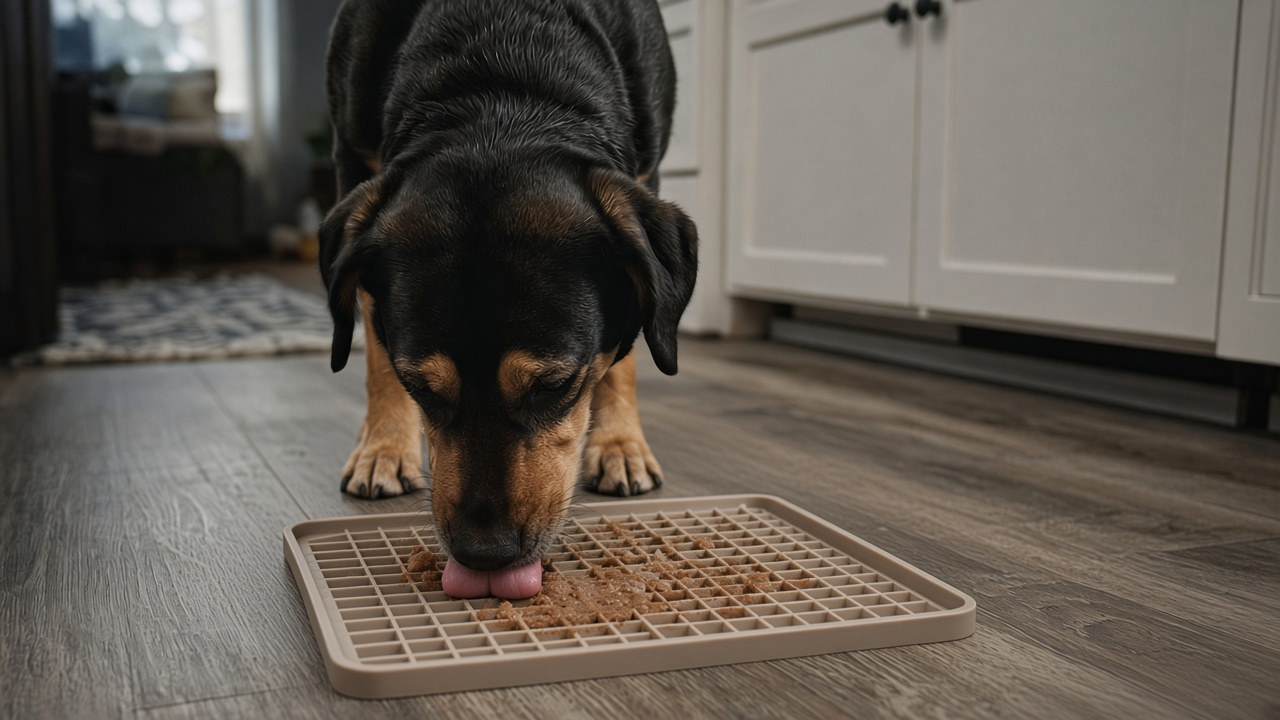
How to use a lick mat for dogs: what to spread, whether to freeze it, how to clean it, which dogs should skip it, and how it differs from a snuffle mat.
A lick mat for dogs is a textured tray you smear with a thin layer of food so the dog has to lick, not gulp. It is a slow, repetitive job. It is not a snuffle mat, and it is not a puzzle.
The sessions that help use a small amount of food the dog already eats, stay supervised until you know the mat will not be chewed, and end when the food is gone—then the mat is washed and put away. The ones that go badly are left out as a chew, packed with rich extras, or treated as a recipe project instead of a meal tool.
This guide is about when a lick mat is the right tool, what to spread, how to clean it, and which dogs should skip it. It is not a ranked list of mats, and it is not a list of recipes.
When a lick mat is the right tool
A lick mat is most useful when the job you want is licking, not searching and not problem-solving:
- You want to slow a wet meal, or give the dog a short, quiet occupation after eating.
- You need a calmer follow-up after a chase, such as a flirt pole or a game of fetch. Sniffing and slow food work help the dog come down; a lick mat can be one of those quieter jobs.
- You can stay for the first sessions, and you can wash the mat as soon as the food is gone.
- The dog licks the surface and leaves the mat itself alone.
It is the wrong tool, or the wrong moment, when the dog shreds silicone or rubber and may swallow the pieces; when you will be gone for hours and are hoping the mat will fill the absence; when what you wanted was a nose-down search or a puzzle the dog can still solve; when two dogs would be left to share one mat; or when a veterinarian has asked you to limit rich or unfamiliar food. A lick mat is still food. It is not a free extra, and it is not a plan for a long absence. Once the food is gone, the mat is a chew.
A lick mat can also be used during a bath or a grooming session if the dog already tolerates that handling. It will not, by itself, make a frightening event easy.
How to use a lick mat without turning it into a problem
1. Start thinner than the videos look
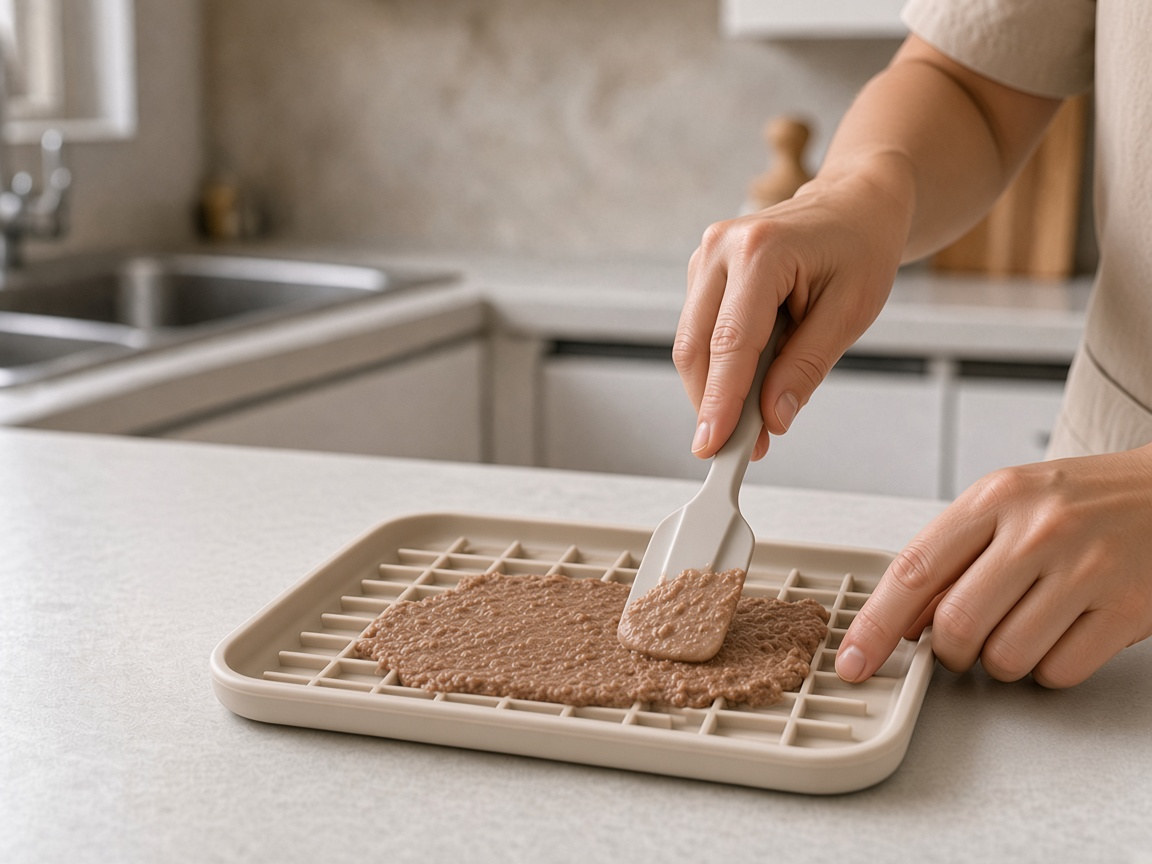
The first session should be easy: a thin smear, food the dog already recognizes, and a chance to finish. Stay in the room. Let them succeed.
If the layer is too thick, some dogs switch from licking to chewing or scooping. If the first session is frozen solid, many dogs get frustrated, then start prying at the mat. Save freezing for later, after the dog already understands the job. Count whatever you spread as part of the day’s calories. A lick mat is enrichment. It is still food.
2. Keep the mat where it stays put
A mat that slides, flips, or comes off a wall mid-session invites the dog to grab the edge and treat it as a chew.
If the mat has suction, use it on a clean, smooth, stable surface the dog can reach in a normal stance. Wash both the cups and the surface first; grease and fur break the seal. If the suction will not hold, put the mat on the floor and stay close enough to stop a flip, rather than sticking it at an awkward height.
3. Stay present, then pick it up when the food is gone
Watch the first sessions until you know what this dog does when the smear is gone. Some lick the last traces and walk away. Some start to nibble the nubs, peel the corners, or carry the mat off.
The session ends when the food is gone, or sooner if the dog starts to chew the mat, guard it, or get frantic. Pick it up. An empty lick mat left on the floor is no longer doing its job, and it should not be left out as all-day occupation.
4. Treat freezing as optional, not as the default
Freezing a thinly smeared mat can make the job last longer, which is useful when you want a slower session—not a harder one. Wait until the dog already licks an unfrozen mat calmly and leaves it intact. Then freeze a thin layer, not a packed, rock-hard block. A very hard surface is a poor idea for a dog with a sore mouth, and it gives a determined chewer more reason to pry the mat up.
A frozen mat still needs you nearby, and it still needs to be washed when the food is gone. Do not leave it out for hours to thaw unsupervised.
5. Wash it like a food object, and retire it when it is damaged
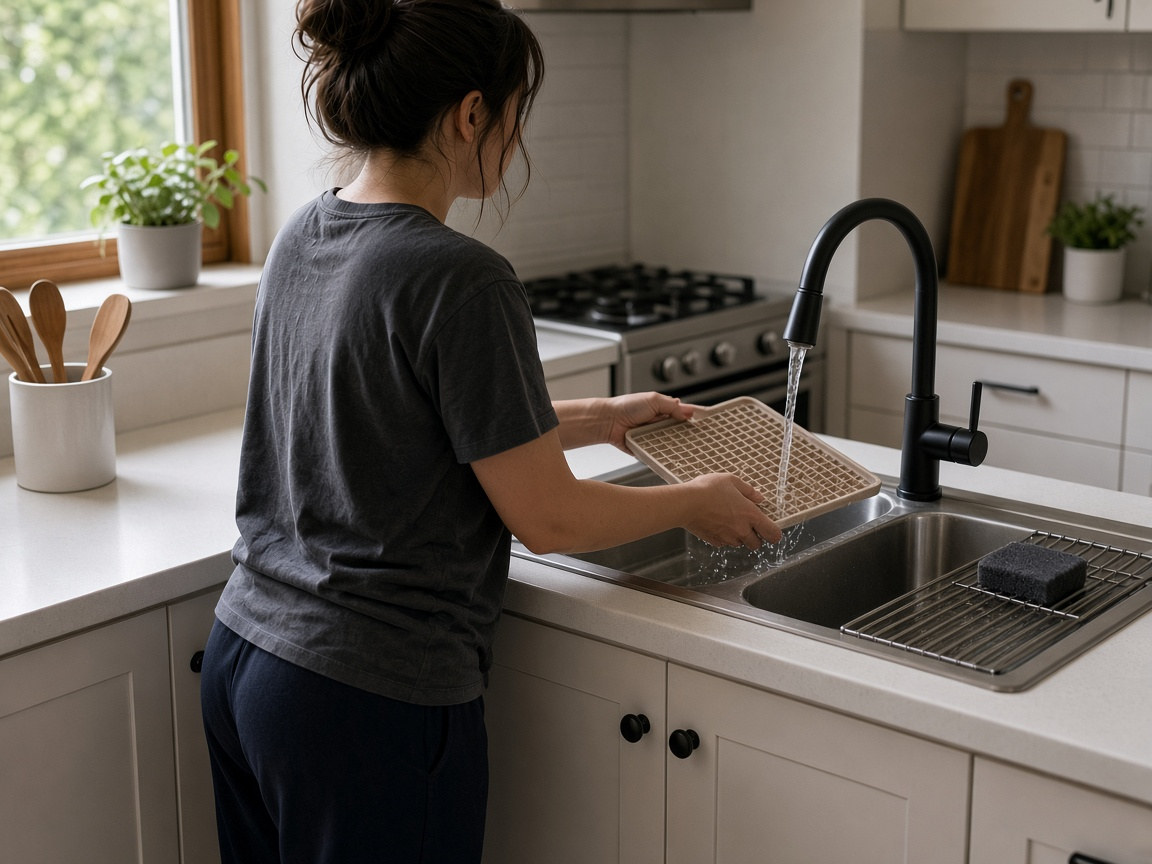
Food and saliva collect in the grooves. Rinse the mat as soon as the session ends, then wash the texture thoroughly and let it dry fully before the next use. A damp mat put away in a cupboard is a hygiene problem, not a timesaver.
Inspect the surface each time. If nubs are missing, the mat is cracked, or the dog has already started to tear an edge, retire it. A damaged lick mat is not “still good enough.”
6. Use one mat, with one dog, at a time
If you have more than one dog, give them separate sessions or separate mats, in a setup where neither has to defend the food. Do not smear one mat and walk away from a shared room.
What to spread—and what to skip
You do not need a special recipe. The most straightforward smear is a thin layer of the dog’s usual wet food, or a little of their regular kibble mashed with water so it stays on the mat. If you add something else, keep it to a small amount of a food the dog already eats and tolerates.
Read labels. Some peanut butters, “sugar-free” spreads, and flavored products contain xylitol, a sweetener that is toxic to dogs. Skip anything with xylitol, and skip the usual foods that are unsafe for dogs, including chocolate, grapes, raisins, onions, garlic, and macadamia nuts. If you are not sure about an ingredient, do not put it on the mat.
Rich, fatty, or very sweet toppings in large amounts are a weak everyday habit. Some dogs do not handle a sudden jump in fat or extras well. If your dog has a history of digestive problems, or you have been asked to keep the diet simple, ask your veterinarian before you turn the mat into a second menu.
Avoid hard chunks, cooked bones, or sticky masses so thick the dog is chewing instead of licking. The point of the texture is to slow the tongue, not to hide a mouthful that can be swallowed whole.
Which dogs should skip it
Skip a lick mat, or use it only with close supervision and a plan to retire it, if:
- The dog shreds silicone, rubber, or suction cups and may swallow the pieces. This is the main deal-breaker.
- You cannot supervise, and you do not yet know whether this dog will eat the mat.
- Two or more dogs would be left to share one mat.
- The dog becomes more agitated, not calmer: frantic licking, snapping at the mat, or not being able to stop.
- A veterinarian has asked you to avoid rich or unfamiliar foods, or the dog is not eating their regular meals reliably.
Puppies can try one if they lick the food and leave the mat alone, and only with you there. A teething puppy will often switch to chewing the object. In that case, pick it up and use a tool meant for the mouth, not a food tray. Large dogs need a mat that actually stays put; size labels matter less than whether the mat survives.
If the only problem is speed-eating at daily meals, a slow-feeder bowl is usually the more practical everyday tool: easier to wash, harder to destroy, and less of a project. Save the lick mat for a slower, occasional job, or for wet food you want to offer in a thinner layer.
Common mistakes
Packing the mat like a dessert, or following a long list of toppings, until the “enrichment” is a large extra meal. Use a thin smear, and count it.
Leaving the mat out after the food is gone, or using it as the plan for a workday alone. This is a supervised food tool.
Freezing the first session, then watching the dog get frustrated and start to pry. Start unfrozen and thin.
Sticking the mat to a surface that will not hold, then blaming the dog when they chew the loose edge.
Never washing the grooves, or putting a damp mat away. It holds food. Treat it that way.
Using a lick mat when what you wanted was a search or a puzzle, then deciding the dog “does not like enrichment.” The job was a mismatch.
Offering one mat to two dogs and walking away.
How a lick mat differs from nearby options
A lick mat is for licking. The value is a slow, repetitive finish, which some dogs find settling. It is usually easier to wash than a fabric mat, and easier to destroy than a well-chosen bowl if the dog decides to chew it.
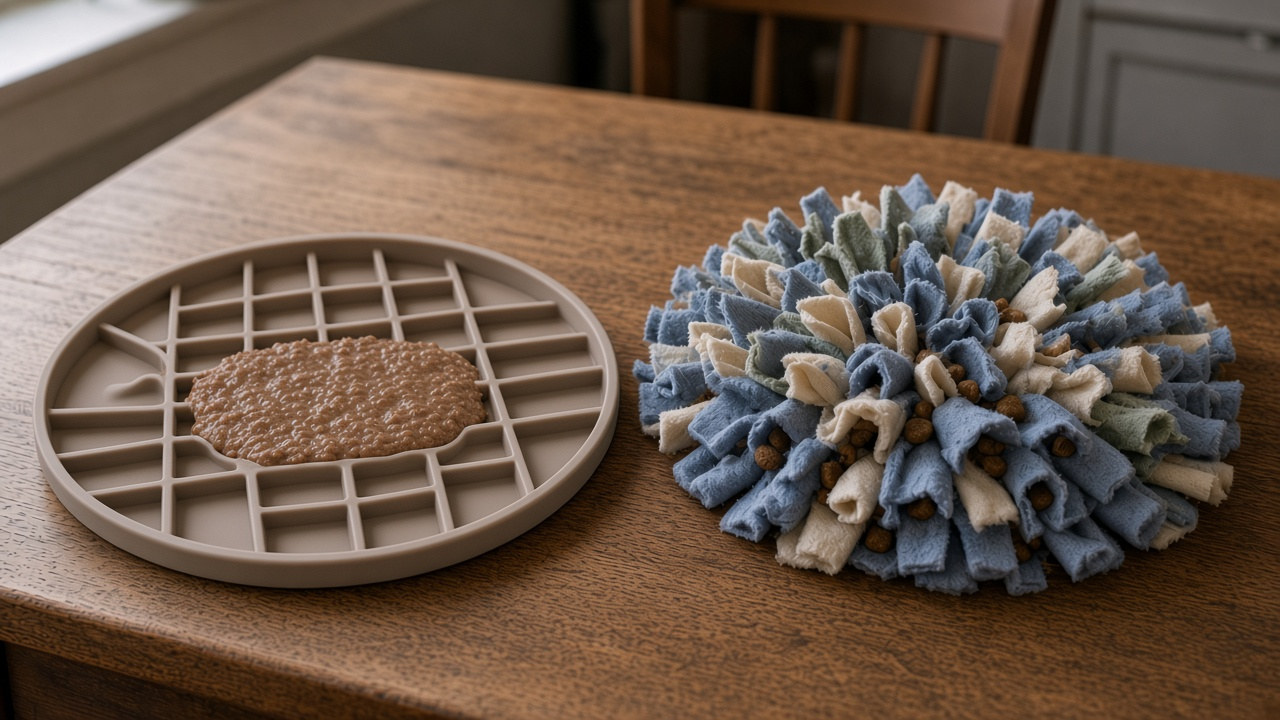
A snuffle mat is for foraging. The dog uses their nose to find dry food in fabric. That is a search. Use the snuffle mat when you want sniffing, and a lick mat when you want licking. They can share a week. They should not be asked to replace each other.
A slow-feeder bowl is for slowing a meal with less theater. It is usually the better everyday dish if you need something durable and easy to clean every day. If speed-eating is the only problem, start there.
A puzzle toy is for problem-solving, at a difficulty the dog can still win. That can be more frustrating than licking, and it is a poor cool-down if the puzzle is still hard. Use a familiar, easy puzzle or a mat after a chase; save a harder puzzle for a different window.
After a flirt pole or a game of fetch, the next activity should help the dog come down, not wind them up again. A lick mat, a snuffle mat, or another easy food job can fill that slot.
A practical split looks like this: most meals in a slow feeder if you need something washable and daily; a snuffle mat when you want a search; a lick mat when you want a smear the dog can lick, including wet food; a puzzle when you want the dog to think.
A simple way to try one
- Wash a new mat and let it dry. Place it where it will stay put, on the floor if you are not sure about suction.
- Spread a thin layer of the dog’s usual wet food, or a little kibble mashed with water. Do not freeze this first session, and do not add a new, rich topping.
- Stay in the room. Let the dog finish. If they start to chew the mat, pick it up.
- When the food is gone, wash the grooves, dry the mat fully, and put it away. Do not leave it on the floor.
- If the dog licked calmly and left the mat intact, you can use it again. Only later consider a slightly longer session, or a thin smear that has been frozen.
If the dog ignores the mat, try a more familiar food and a thinner layer before you assume they will never use one. If they go straight for the edges, this may not be their tool. Switch to a slow-feeder bowl or a supervised snuffle mat rather than buying a “tougher” mat and hoping the chewing stops.
FAQ
What is a lick mat for dogs?
A textured tray you smear with a thin layer of food so the dog has to lick, not gulp. It is a slow, repetitive job. It is not a snuffle mat, not a puzzle, and not a chew to leave out after the food is gone.
How do I use a lick mat?
Start with a thin smear of food the dog already eats, secure the mat so it stays put, and stay in the room. Let the dog finish, then pick the mat up, wash it, and put it away. Do not begin with a packed, frozen mat.
What can I put on a lick mat?
The simplest choice is a thin layer of the dog’s usual wet food, or a little of their kibble mashed with water. If you add something else, use a small amount of a food they already eat, and check the label for xylitol and other ingredients that are unsafe for dogs. A lick mat is still calories, not a free extra meal.
Can I freeze a lick mat?
Yes, once the dog already licks an unfrozen mat calmly. Freezing makes the job last longer. Skip a rock-hard block if the dog has a sore mouth or tries to pry the mat up and chew it. Still supervise, and still wash the mat when the food is gone.
Are lick mats safe?
They can be, when you stay present until you know the dog will lick the food and leave the mat intact, and when you retire a mat that is already cracked or chewed. The usual risks are swallowed pieces, food left in dirty grooves, and rich spreads that do not belong in that dog’s diet.
Can I leave my dog alone with a lick mat?
Not until you have watched enough sessions to know they will not chew or swallow it, and not as a plan for a long absence. Once the food is gone, the mat is a chew. Even with food on it, an unsupervised dog can flip the mat and work on the edges.
Which dogs should skip a lick mat?
Dogs that shred silicone or rubber and may swallow the pieces, dogs you cannot supervise yet, dogs that guard food in a shared space, and dogs whose veterinarian has asked you to limit rich or unfamiliar food. Puppies can try one only if they lick instead of chewing the mat, and only with you there.
Is a lick mat the same as a snuffle mat?
No. A lick mat is for licking a smear of food. A snuffle mat is for sniffing out dry food hidden in fabric. One is repetitive and often settling; the other is a search. They can share a week. They do not do the same job.
Will a lick mat calm my dog?
Licking helps some dogs settle, especially after a short session or as a quiet follow-up to play. It is not a treatment for fear or anxiety, and it will not make a stressful event easy on its own. If the dog gets frantic, guards the mat, or cannot stop, it is the wrong tool for that moment.
How do I clean a lick mat?
Rinse it as soon as the session ends, then wash the grooves so food and saliva do not sit in the texture. Let it dry fully before the next use. A mat you cannot get clean is a poor everyday tool, no matter how long it occupies the dog.