Dog Puzzle Toys
How to Choose a Puzzle Toy for a Large Dog—and When to Skip One
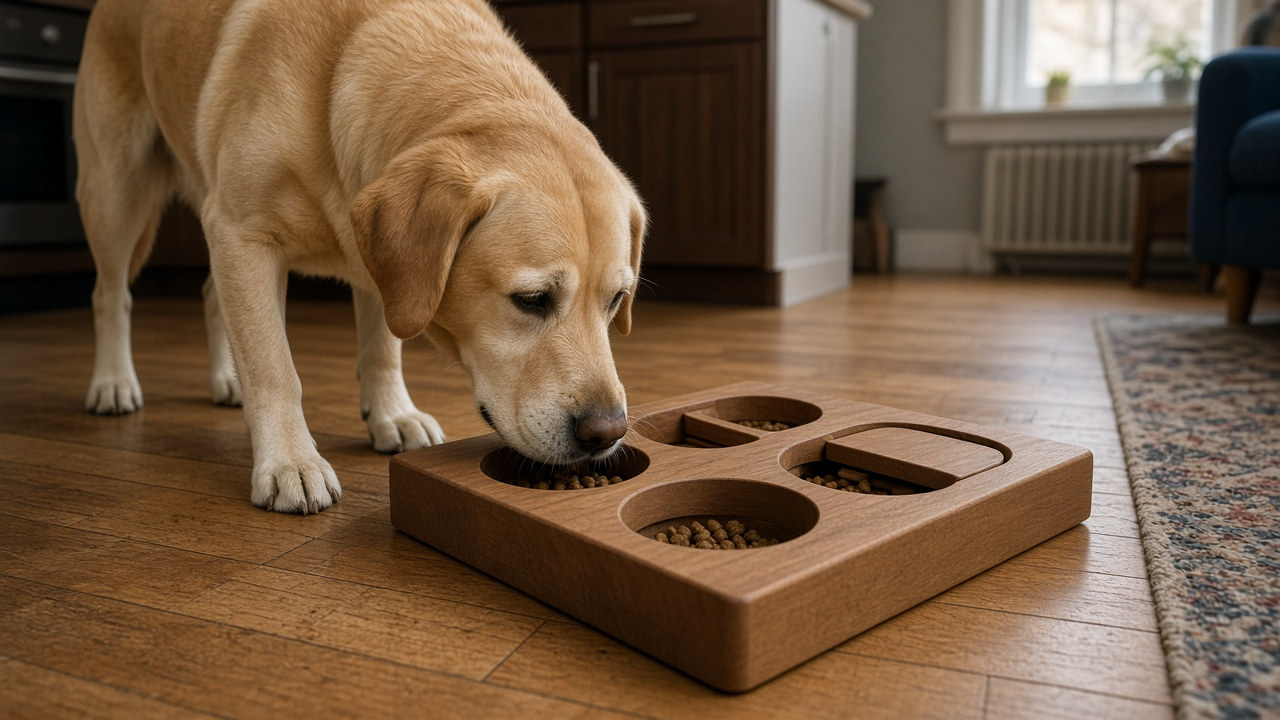
How to choose dog puzzle toys for large dogs: what size and openings actually fit, which designs can take the force, and when a puzzle is the wrong tool.
A dog puzzle toy for a large dog has to survive a bigger mouth and more force, not just a harder challenge. Size, openings, and durability come before difficulty.
The versions that work are large enough that loose parts cannot be swallowed, sturdy enough that they do not crack on the first determined bite, and stable enough that the dog works the food instead of carrying the board away. The ones that go badly are thin “advanced” puzzles with small sliders, tight wells a large muzzle cannot use, and a label that says “for large dogs” without changing the construction.
This guide is about how to choose and use dog puzzle toys for large dogs so the object actually fits. How to grade difficulty, when to stop, and how a puzzle should share the day with a snuffle mat or a slow-feeder bowl still belongs with the difficulty guide. It is not a ranked list of toys.
When a large-dog puzzle is the right tool
A puzzle is still for thinking: to nudge, lift, slide, or sequence actions in order to get food. For a large dog, it is a good fit when:
- You can offer a toy whose parts are too big to swallow, and whose structure can take pressure from a large jaw.
- The openings are usable: a large muzzle can reach the food without getting stuck or giving up and crushing the toy.
- You will start easy, even if the dog is big or “smart,” and you can stay for the first sessions.
- You can offer the puzzle to one dog at a time, then pick it up when the food is gone.
It is the wrong tool, or the wrong moment, when:
- The dog already shreds plastic, rubber, or small parts and may swallow them. A larger label will not fix that. Skip puzzles and use something they cannot take apart.
- You only need an everyday, easy-to-wash way to slow a meal. A slow-feeder bowl usually does that job with less frustration and less destruction.
- You need a calm, nose-down search after a chase. An easy forage, such as a snuffle mat, is usually a better cool-down than a hard or fragile puzzle.
- The only puzzles on offer have tight wells, thin boards, or tiny removable pieces, even if the box says they are for large dogs.
- Two dogs would be left to share one puzzle. Food inside a toy is a common trigger for guarding.
- The dog is already over-aroused, in pain, or too tired to problem-solve. A bigger puzzle will not settle that dog.
A skip is not a failed enrichment plan. A sturdy bowl is a successful outcome when a puzzle would become something to swallow.
How to choose one that actually fits a large dog
1. Start with the mouth and the force, not the difficulty number
“For large dogs” on a box is a starting hint, not a guarantee. You are choosing an object that will sit under a large muzzle and take paw pressure, not a harder quiz.
The toy should be bigger and more stable than something the dog can pick up, shake, and break in a few tugs. If a piece, cap, or slider can come off, it should still be too big to swallow. A light board that flips and becomes a chew is the wrong shape, even if the challenge looks clever.
Difficulty is a separate question. A large or strong dog still needs an honest, easy first session. How to start at Level 1 and move up only after calm, complete work is covered in the difficulty guide. Do not skip that because the dog is big.
2. Check the openings before you check the “level”
A large muzzle needs openings it can actually use. Wells, sliding doors, and flaps that are tight for a big nose often produce the same ending: the dog flips the toy, paws too hard, and crushes it to get the food.
The opening should let the dog work the food with a nose or paw without getting stuck. It should not be so open that one flip dumps the whole meal. There is no single measurement that fits every dog. If your dog cannot work it calmly, that toy is too small, too awkward, or both.
Look at the removable parts in the same pass. Small caps, pins, thin flaps, and decorative bits are a swallowing hazard, and a large dog can pull them off faster than a small one. If you cannot be sure a part will stay on, choose a simpler design.
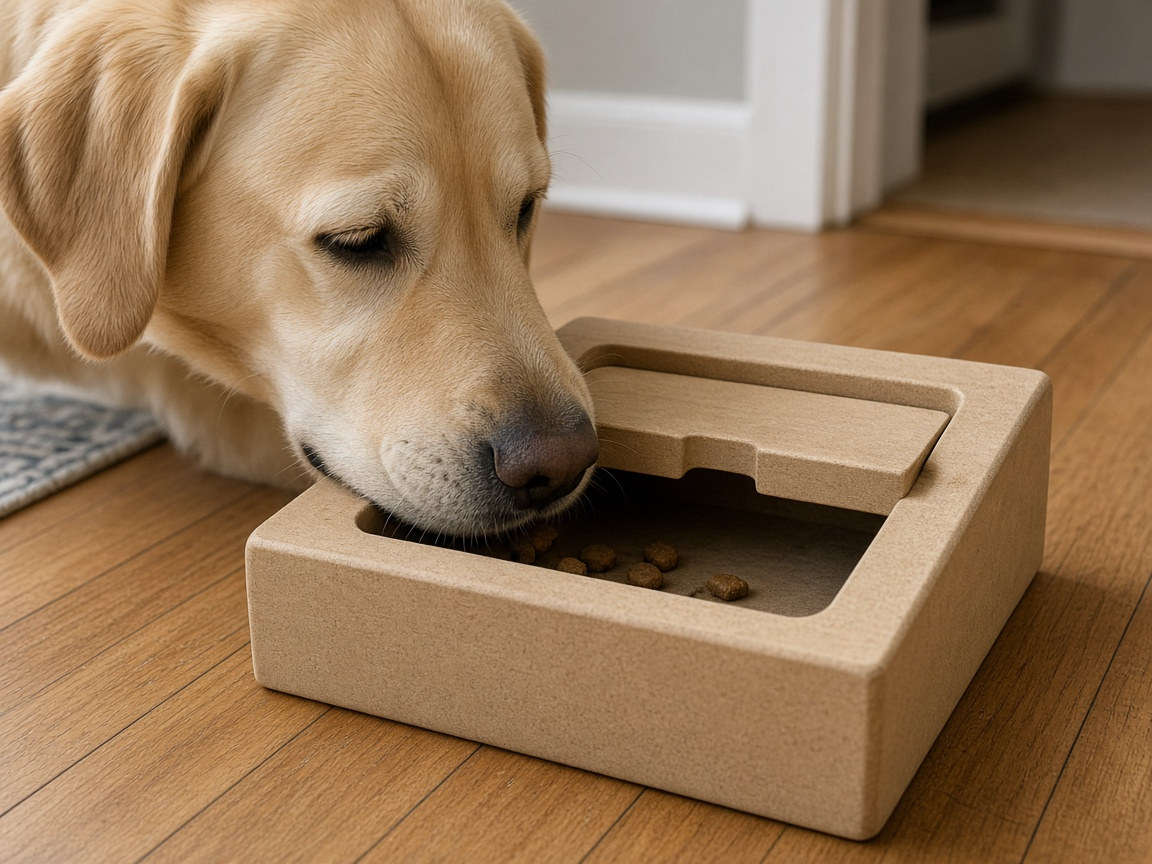
3. Choose a structure that can take a determined bite
Thick, washable, rigid materials beat a thin decorative board. A simple, solid puzzle that survives the session is more useful than an “expert” design that cracks.
No toy is indestructible, and a marketing claim is not a plan. Inspect the puzzle after every use. Retire it if it is cracked, if a piece is loose, or if a broken edge is sharp. A damaged “large dog” puzzle is not “still good enough.”
If the dog mouths the puzzle as a chew, stop and pick it up. Chewing is information: the material, the openings, or the moment in the day was a mismatch. It is not a reason to buy a more advanced one. Go back to a simpler, more solid design, or switch to a bowl or a supervised snuffle mat.
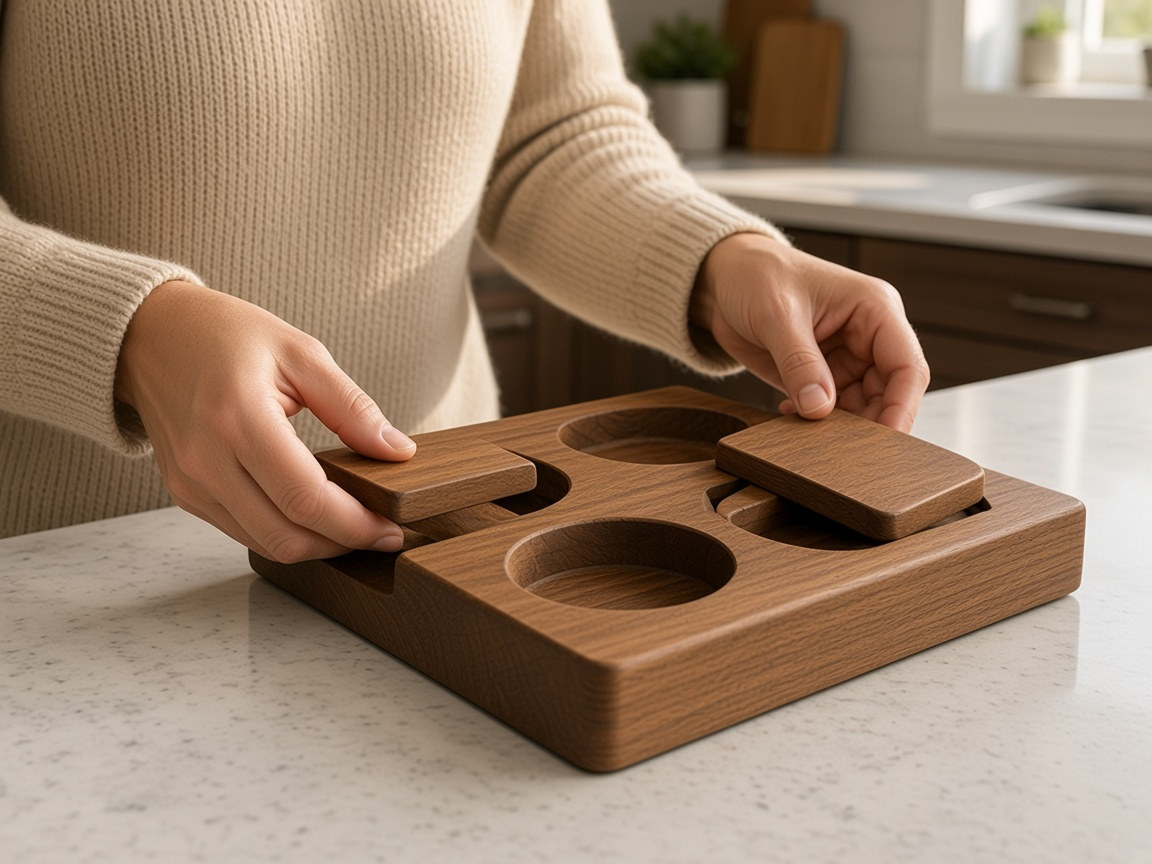
4. Run the first sessions like any puzzle, then inspect
Use a small amount of the dog’s usual food, with some pieces visible so the first try is easy. Stay in the room. The session ends when the food is gone, or sooner if the dog starts to treat the toy as a chew, guards it, or cannot get the food and becomes frustrated.
Pick it up. An empty puzzle left on the floor is a chew with removable pieces, and a large dog can do more damage, faster.
After each session, turn the toy over and check sliders, wells, and edges. Wash it like a food object, and let it dry. If you later want a harder challenge, change difficulty only after the current toy has stayed intact and the dog has been finishing calmly. That step still belongs with the difficulty guide, not with a thicker board alone.
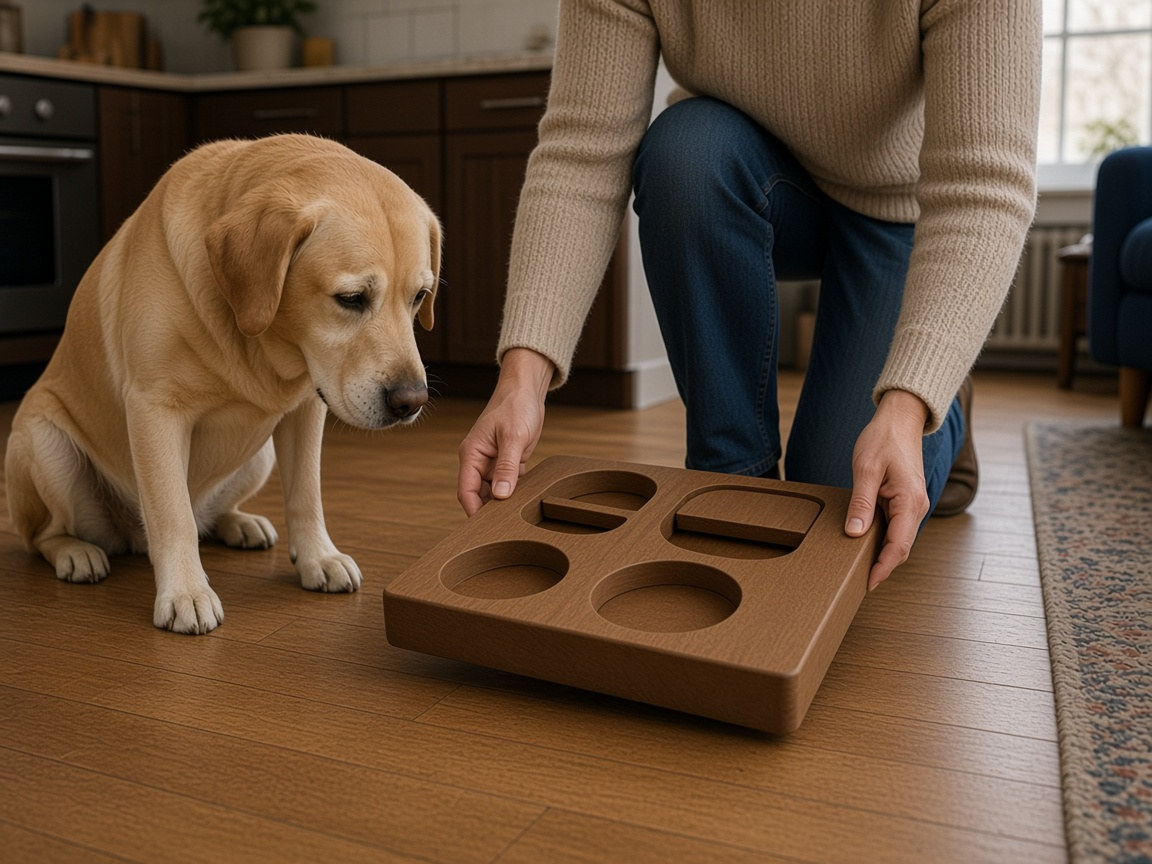
5. Do not ask a durable puzzle to do every job
Size and strength do not cancel the need for other work. A flirt pole or a walk is still a different job from problem-solving. A puzzle will not replace physical exercise, and a harder puzzle is a poor cool-down after intense play.
If the dog loves working but wrecks every complex board, keep them at a simple, durable level and give them other jobs for the rest of the day. That is a successful plan, not a dog who “outgrew” puzzles.
When to skip one, or use something else
You do not have to find a puzzle that can survive your dog. If every design comes apart, or if the dog is a strong chewer who dismantles objects, switch to a slow-feeder bowl or another tool they cannot take to pieces.
If what you wanted was a nose-down search, use a snuffle mat only if the dog will not eat the fabric, and pick it up when the food is gone. If what you wanted was to slow a meal with less thinking, start with a bowl.
A larger, heavier puzzle is worth trying only when you can still supervise, and only when the parts and openings actually fit. It is not an upgrade path for a dog who already swallows pieces.
Common mistakes
Trusting a “for large dogs” label without checking part size, thickness, and openings.
Buying an advanced thin board because the dog is large and “smart.” Start easy, and start with a toy that can take the force.
Choosing wells or doors that are tight for a large muzzle, then blaming the dog for flipping and crushing the puzzle.
Leaving the toy out after the food is gone, or leaving two large dogs with one puzzle.
Using a hard or fragile puzzle as a cool-down after a flirt pole or a game of fetch.
Skipping the inspection. Cracks and loose sliders show up after a few good sessions, not only on day one.
Treating a destroyed puzzle as a reason to go harder, or as proof that the dog needs a more expensive “expert” toy.
How size and durability differ from nearby options
The difficulty guide answers how hard the work should be, and when to stop. This page answers whether the object can fit a large dog’s mouth and survive the session. You still need both. A sturdy toy at the wrong difficulty is frustrating. A clever toy that shatters is unsafe.
A snuffle mat is for searching, not for sliding and sequencing. It can be a good second job on the same day, but it is the wrong substitute if the dog eats fabric. A lick mat is for licking a smear of food; a large dog can still peel or chew the mat, so the same supervision rules apply.
A slow-feeder bowl is for slowing a meal with less thinking and, usually, more durability. If puzzles keep failing, the bowl is the everyday tool. A flirt pole raises chase and arousal; it does not replace a puzzle, and a puzzle does not replace it. Use each for its own job, and do not hand a large dog a hard board as the way to “come down.”
A simple way to try one
- Choose a simple, sturdy puzzle with parts too big to swallow and openings a large muzzle can use. Skip thin boards and tiny removable pieces, even if they are labeled for large dogs.
- Check every slider, cap, and well before the first session. If a part already feels loose, do not use that toy.
- Start easy, with some food in plain view. Stay in the room.
- When the food is gone, pick the toy up, wash it, and inspect it. If the dog solved it calmly and the toy is intact, you can use the same design again, and only later change difficulty.
- If the dog cannot reach the food, or starts to crush or chew the puzzle, stop. Try a more solid, easier design if you can still supervise, or switch to a bowl. Do not move up.
If the dog ignores the toy, make the first search easier before you assume they will never use one. If they go straight for the edges and treat it as a chew, this is not their tool, and a harder puzzle will not fix that.
FAQ
What makes a puzzle toy suitable for large dogs?
A toy the dog cannot crush or swallow in pieces, with openings a large muzzle can actually use, and enough weight or stability that it is not immediately flipped and carried off as a chew. Size and durability come first. Difficulty is a separate question, and a large dog still needs an honest, easy start.
Is a “large dog” label enough?
No. The label does not tell you whether the sliders, caps, or wells are too small, or whether the board will crack under a determined bite. Check the parts with your dog in mind: nothing that can come off and be swallowed, openings the muzzle can use, and a structure that stays put.
What size should the parts and openings be?
Parts should be too big to swallow if they come loose, and openings should let a large nose or paw work the food without getting stuck. A well that is tight for a big muzzle often leads the dog to flip the toy and crush it. There is no single inch measurement that fits every dog; if the muzzle cannot work it calmly, that toy is too small or too awkward.
Are harder puzzles better for large dogs?
No. A large or strong dog is not automatically ready for a long sequence or a tight, advanced board. Start easy, even if the dog seems sharp, and move up only after calm, complete sessions. A simple, durable puzzle is a better first choice than a fragile “expert” design.
Can I leave my large dog alone with a puzzle toy?
Not until you have watched enough sessions to know they will not break or swallow parts, and not with another dog present. Even then, pick the toy up when the food is gone. An empty puzzle is a chew with removable pieces, and a large dog can do more damage, faster.
My large dog destroys every puzzle. Now what?
Stop using any toy if pieces can be swallowed. Try a simpler, more solid design only if you can still supervise, or switch to a slow-feeder bowl or a supervised snuffle mat. Destruction is information: the material, the openings, or the moment in the day was a mismatch. It is not a reason to buy a harder puzzle.
Do large dogs need a different difficulty level?
Not because of body size. Difficulty should still match how the dog thinks and how calmly they work, not how much they weigh. Use the same honest start and the same signs that a puzzle is too hard or too easy. What changes is whether the object can survive the mouth that is working it.
Is a slow-feeder bowl better for a large dog?
It is often the better everyday tool if you only need to slow a meal, or if puzzles keep getting wrecked. A bowl is usually more durable and easier to wash. A puzzle is for thinking. Many large dogs can use a bowl at meals and a sturdy, easy puzzle at other times.
Can giant breeds or strong chewers use puzzle toys?
Only if the toy can take that force and the parts cannot be swallowed. A strong chewer is not a reason to pick a more advanced board. If the dog treats every object as something to dismantle, a puzzle may be the wrong tool, and a bowl or another supervised job is the safer plan.
Can two large dogs share one puzzle?
No. Food inside a toy is a common trigger for guarding, and two large dogs raise the risk of a scramble or an injury. Offer the puzzle to one dog at a time, in a space the other cannot reach, and pick it up when the food is gone.